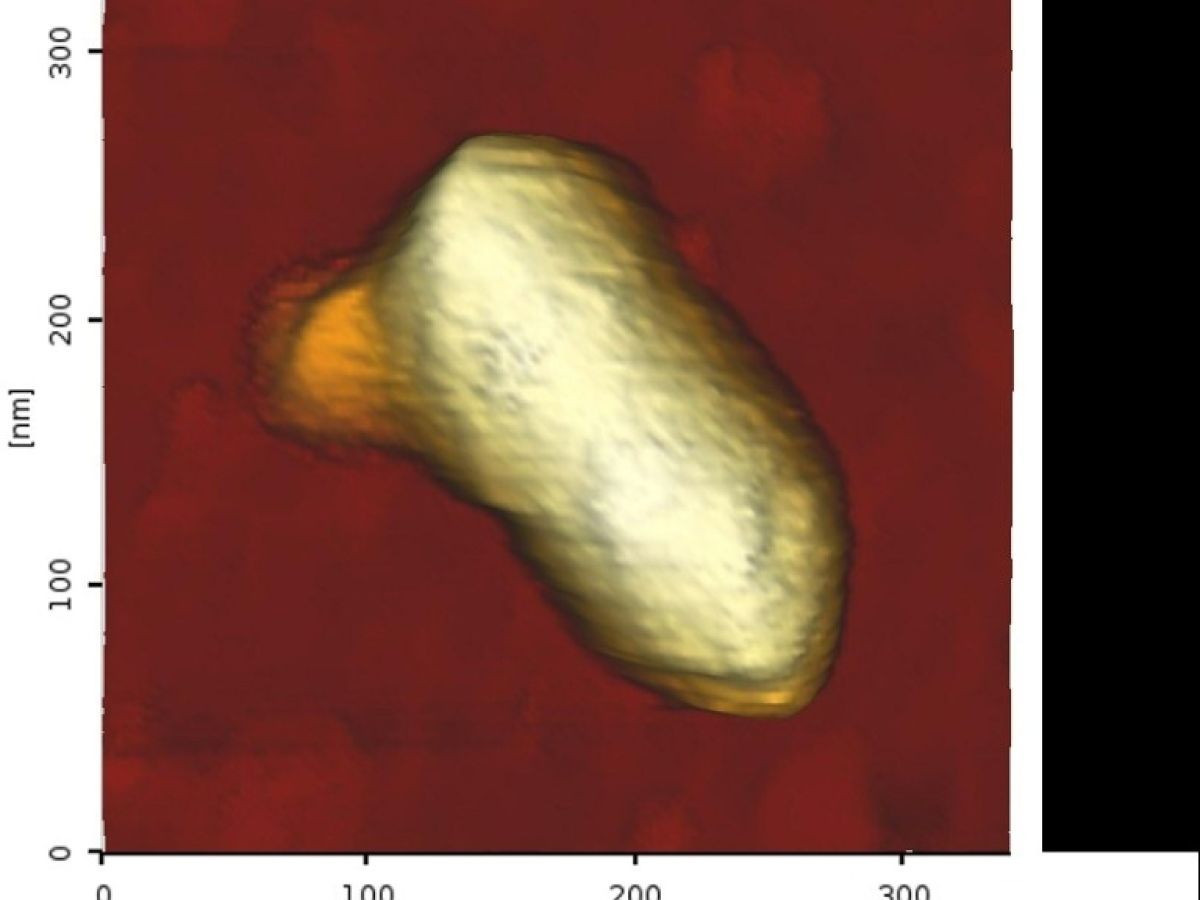
Tiny viruses slip inside other viruses to penetrate and infect a cell. To their great surprise, researchers have just observed this previously unknown mechanism.
"Deltaviruses are transmitted via a viral Trojan horse," announces a study published Friday in Cell, one of the most prestigious biology journals, and led by CNRS researchers.

What are deltaviruses? They are tiny viruses that are unable to infect a cell on their own and therefore need the help of other viruses with a more classic and complex structure. They are part of the "satellite viruses".
In humans, the most well-known virus is hepatitis D. This particularly serious liver infection only affects patients already infected with another virus, hepatitis B.
However, in recent years, several viruses with a structure similar to that of hepatitis D have been discovered in animals, and these viruses do not only infect the liver. They belong to the deltavirus family.
The Cell study, led by virologist Joe McKellar, examines how these viruses function.
How do they use other viruses to circulate and enter a cell? By slipping inside, as illustrated by striking images from several advanced microscopy techniques. Packaged in this way, the deltaviruses are then carried into the cell, which will eventually become infected.
"We have never seen a virus enter another virus. It was unimaginable before we visualized it," virologist Karim Majzoub, who supervised this work, told AFP enthusiastically.
– Viral Hitchhiking –
Until now, only one other mechanism had been identified to explain how deltaviruses instrumentalize other viruses. They sometimes simply borrow a crucial protein to enter a cell.
Friday's study shows that these mini-viruses do not just borrow a key, they also "hitchhike," in the words of Mr. Majzoub, a technique that probably enhances their infectious capabilities.
“The deltavirus enters another virus, it squats, it waits. But it only needs that to transport itself into a cell,” explains Mr. Majzoub. Once it reaches its destination, it is able to function independently.
For the time being, this discovery has no implications for human health. The researchers only studied viruses identified in animals in the laboratory, and not the hepatitis D virus, although Mr. Majzoub expressed confidence in the existence of a similar mechanism.
Nevertheless, this research provides a better understanding of the circulation of these viruses, which can cause serious illnesses. Snakes infected with a deltavirus in the brain, for example, stop moving, clearly affected by neurological disorders.
Researchers hypothesize that this viral "Trojan horse" facilitates the transmission of mini-viruses from one species to another.
The study shows, in fact, that the same deltavirus can, without discrimination, enter into three very distinct viruses: the VSV virus, typical of cattle, a snake virus and even the human herpes virus.
In other words, a deltavirus could jump from one animal to another by changing the virus that serves as its mode of transport.
With possible consequences for humans? Mr. Majzoub cautiously suggests that cerebral infections with deltavirus could explain certain dementias.
But, he admits, this remains highly speculative, as deltaviruses have almost never been detected in humans outside the liver, with one rare case having been identified a few years ago in salivary glands. Therefore, at this stage, there is no evidence to establish a link with any human pathology other than hepatitis.
 English
  French