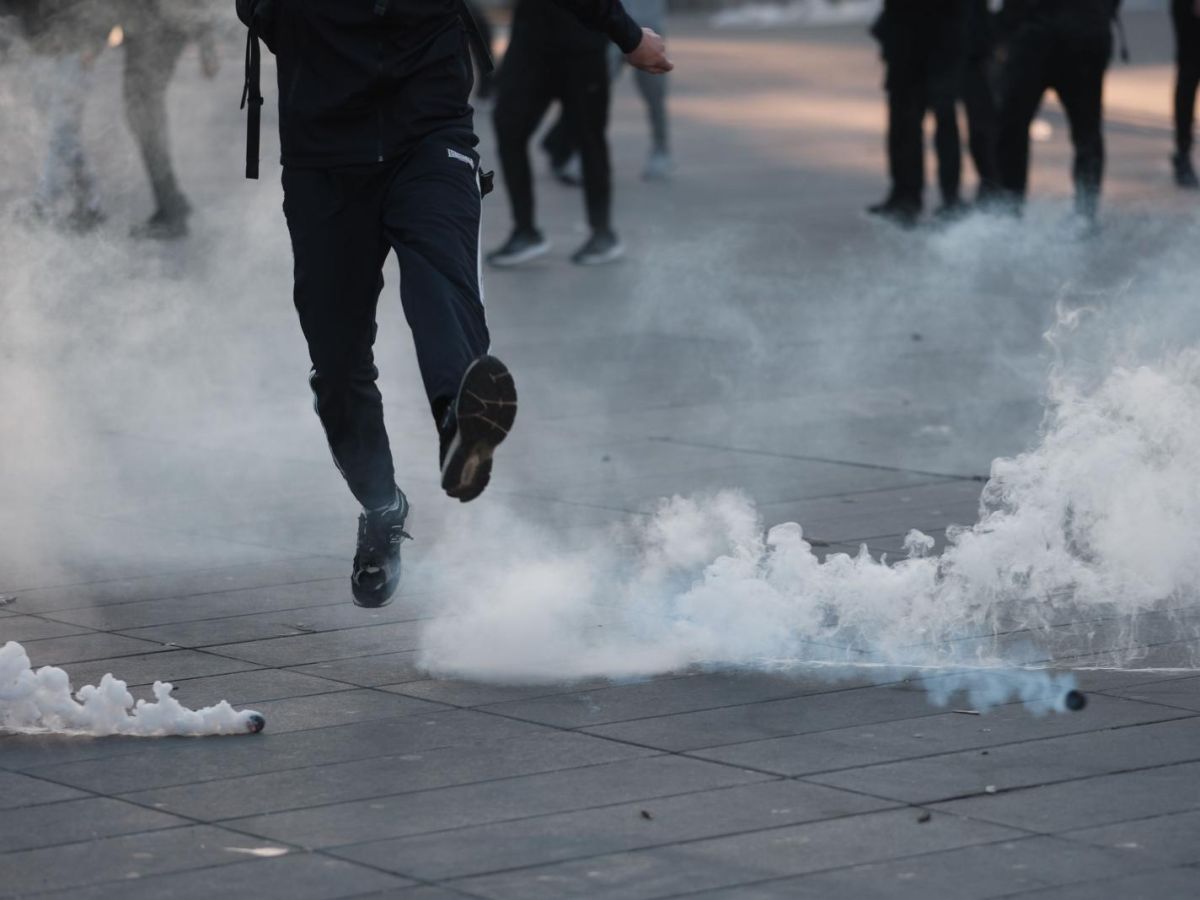
Since the start of the protests in France, the collective Blood tear gas collected 10,000 testimonies from women who experienced gynecological symptoms after exposure to tear gas. But where does scientific research stand on this subject? We asked Alexandra Alvergne, research director at the CNRS and specialist in menstrual cycles.
“ The thing is, we don't know much. »,« laments Alexandra Alvergne.« These tear gases were tested on young men in the 1950s and 60s, in a military context. They have never been tested on the female reproductive system. »In the scientific literature, only two papers were published in peer-reviewed journals, in 2021 and 2023.« These papers show associations, not cause-and-effect relationships. But we have a number of physiological hypotheses to explain why there might be a link. » explains the researcher.
A link with nociceptors responsible for uterine cramps
The first hypothesis concerns pain receptors, also known as nociceptors. The gas would bind to them, leading to inflammation and the production of prostaglandins, which are themselves involved in uterine contractions. The second hypothesis is linked to the production of stress hormones related to the context of the symptoms. These hormones influence the brain, its communication with the ovaries, and therefore ovulation.« Either there is no ovulation, or ovulation is delayed. And this is what will alter the length of the cycle. »
“ Until 1993, it was not mandatory to include women in clinical trials » says Alexandra Alvergne.« But since then, we have many more women funding research, who are researchers and who are therefore taking up subjects such as the menstrual cycle. »The emergence of testimonies on social media also serves as a warning sign,", encouraging research to take hold of certain subjects. Faced with this scientific void, the researcher decided to study the issue and intends to conduct studies. But in the meantime, she raises the question of the precautionary principle and the suspension of the use of these gases.
 English
 French