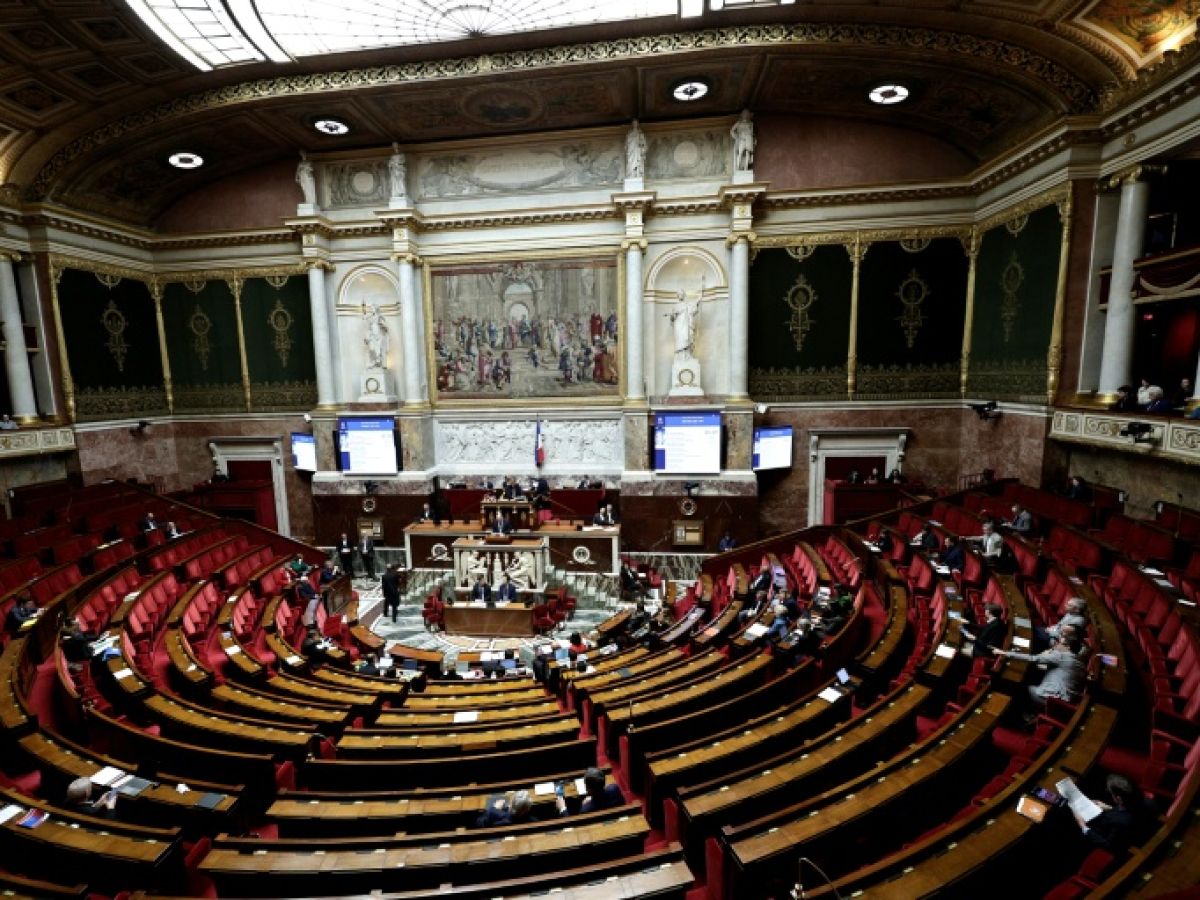
The National Assembly will again consider on Monday the creation of a right to assisted dying, with a formal vote scheduled for February 24. This is a milestone on the tortuous path of this reform, which its supporters hope to see finalized before the summer.
A general discussion will take place from 9:30 PM on two bills, one on palliative care, and the other, put forward by MoDem group MP Olivier Falorni, on end of life.
On May 27, the latter had taken a decisive step, being adopted largely in the Palais Bourbon by 305 votes against 199.
After passing through the Senate, which rejected it following chaotic debates, the text returns to the National Assembly for a second reading, where it should logically be adopted again.

But this will not be the end of its legislative journey, far from it: failing an agreement with the Senate, the government, if it wants final adoption, will have to give the final say to the National Assembly. This will require, after the second reading in both houses, the convening of a joint committee to try to reconcile their viewpoints, and, after a likely failure, a further reading in the National Assembly and the Senate, and finally the final reading.
Both Mr. Falorni and the President of the National Assembly, Yaël Braun-Pivet, want the text to be adopted before the summer break.
A challenge, given that many texts are on Prime Minister Sébastien Lecornu's desk, and that the Senate is reportedly reluctant, according to parliamentary sources, to sit in July, due to senatorial elections.
"I don't see how there is room" in the calendar, emphasizes a former minister, for whom the subject is "not necessarily a priority".
“My role is to ensure that there is a vote, if possible before the summer,” Laurent Panifous, Minister for Relations with Parliament, told Time France on Monday. “It would be a major societal shift and immense progress to be able to recognize this suffering and to agree to support these people,” insisted Mr. Panifous, one of the former rapporteurs of the bill on assisted dying when he was a member of parliament.
Speaking to AFP, Olivier Falorni said he was confident: "I cannot imagine for a second that the government, and a fortiori the President of the Republic (Emmanuel Macron), will not take all the necessary decisions in terms of inclusion in the parliamentary calendar to ensure that this text is passed," he said, without ruling out that some might be tempted to play the "delaying" strategy.
During his New Year's address on December 31, Emmanuel Macron made the law on end-of-life care one of his three priorities for 2026, recalling his commitment to the subject since 2022.
– “Strict” criteria? –
In essence, the MPs should be replaying debates that have already been held many times, in committee or in the plenary session.
The text provides for the creation of a "right to assisted dying" consisting of "authorizing and accompanying" a patient who wishes to administer a lethal substance to themselves, or to have it administered by a doctor or nurse, if they are "not physically" able to do so.
While Mr. Falorni highlights the "balance" achieved by the deputies and the multiple conditions granting the right to assisted dying, his opponents judge that the criteria "are not strict", like the LR deputy Philippe Juvin.
In an interview with the JDD on Sunday, Mr. Juvin reiterated his camp's grievances against the text: the conditions may include "patients who are not at the end of their lives," the control of the decision is devolved to the doctor in charge of the procedure "who will therefore be both judge and party," the deadlines are shorter than in other countries that have legislated on the subject, and the "obstruction offense" would give the law "a very repressive character for anyone who opposes it."
"This law is therefore permissive, expeditious, without real control or recourse," he asserts.
The text on palliative care is more consensual, although MPs are expected to fight to reinstate the creation of an "enforceable right" to palliative care, which was approved during the first reading but removed by the Senate.
 English
  French