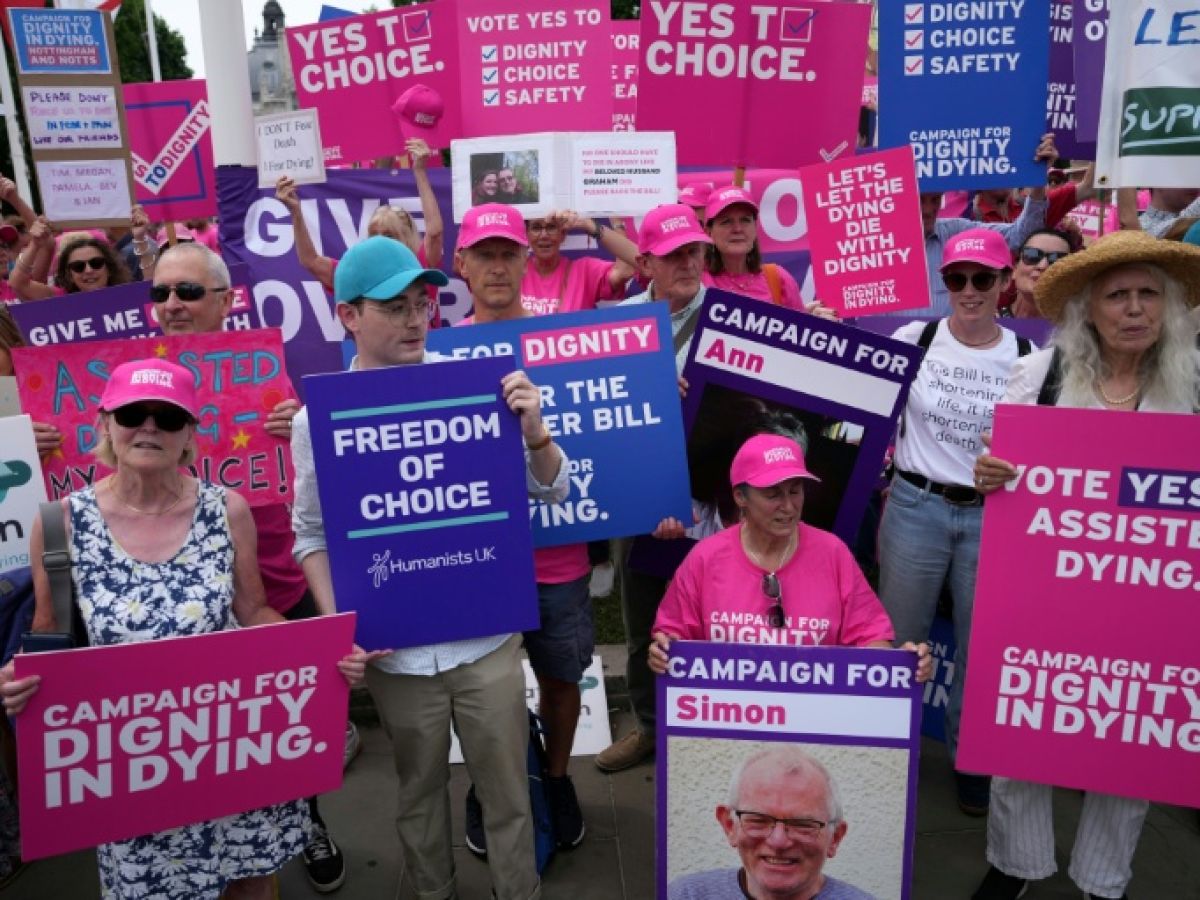
The Scottish Parliament, which has autonomous powers in matters of health, rejected on Tuesday evening a bill that legalizes assisted dying, at a time when a similar proposal concerning England and Wales is bogged down in Westminster.
Regional parliamentarians rejected the text by 69 votes to 57, at the end of a debate lasting more than two hours.
The text would have allowed adults with a terminal illness and an estimated life expectancy of less than six months to request assistance in dying.
It was the subject of more than a year of discussions and underwent numerous amendments.
The parliamentarians had not received any voting instructions, making the result uncertain.
Liberal Democrat MP Liam McArthur, who championed this legislation, had, from the outset of the debate, called on his colleagues to vote in favour of the text, telling them to keep in mind "the voices of dying Scots".
– Divided –
"All we are doing by postponing the amendment of the law is transferring the decisions abroad (...)," he argued, assuring that "the problem" would not disappear with the rejection of the text.
But opinions were divided.
Many parliamentarians spoke, some with emotion, about family members suffering from incurable diseases. Others recalled testimonies from patients gathered over the past year.
For its supporters, the law would have made it possible to offer more dignity and freedom of choice regarding their end of life to people with an incurable disease.
But opponents highlighted the lack of safeguards, with some arguing that vulnerable people could be driven to suicide. Others feared an impact on end-of-life care.
"My conscience tells me this: a society that allows a person with a terminal illness to believe that their only options are either to endure intolerable suffering or to end their life prematurely is a society that has failed them," said Humza Yousaf, a member of the SNP and former Scottish First Minister.
"I refuse to accept that these are the only two possible options," he concluded, saying he believed in a third way.
The rejection of the text will undoubtedly be scrutinized by London, where a similar bill on assisted dying in England and Wales seems destined to fail.
It became bogged down in the House of Lords, the upper house of the Westminster Parliament, due to the numerous amendments tabled, making it unlikely that the text would be adopted before the end of the parliamentary session, scheduled for May.
Both houses must approve the bill for it to come into effect, and bills still under discussion at the end of a parliamentary session are generally abandoned.
Jersey and the Isle of Man, British Crown dependencies with their own governments, have already approved similar texts, which are still awaiting the royal seal to come into force.
 English
  French