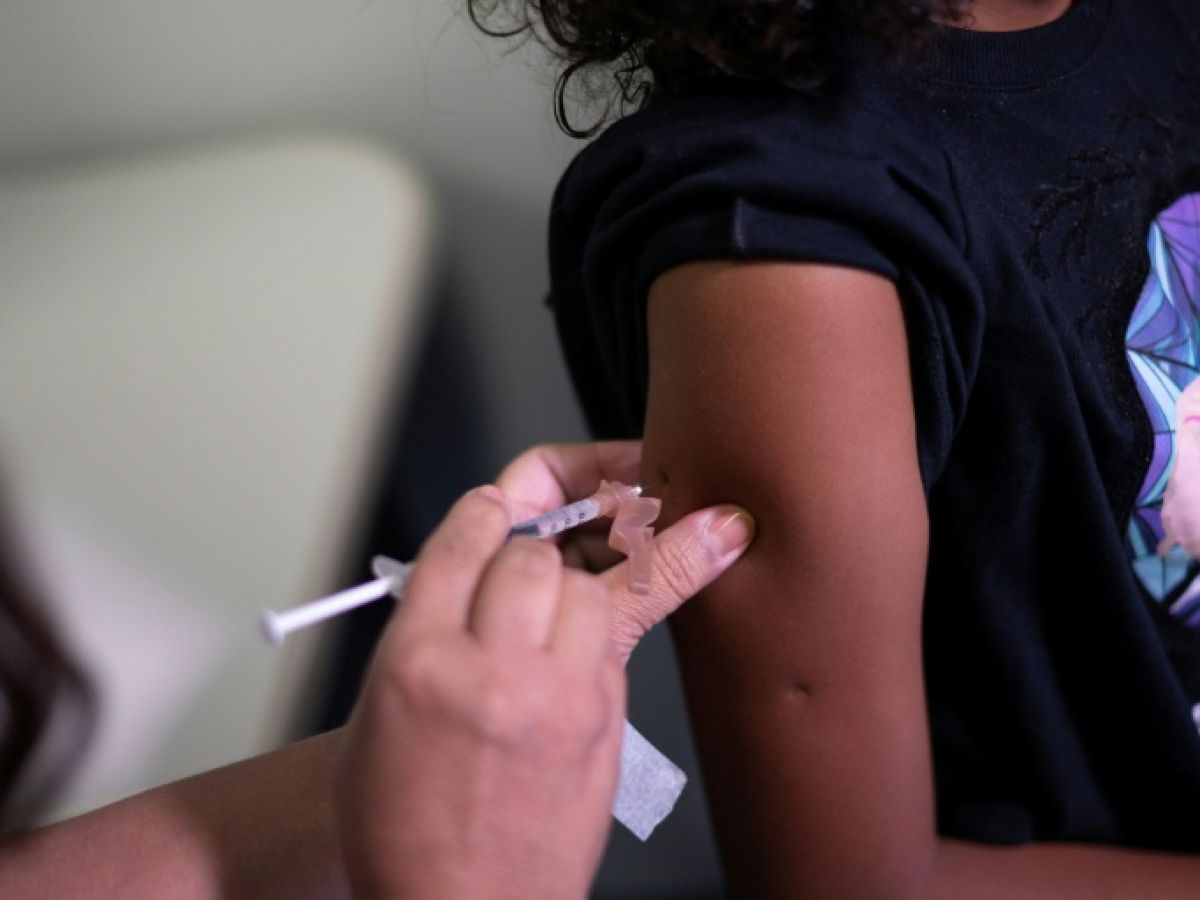
The world's first single-dose dengue vaccine was approved Wednesday in Brazil, a development hailed as "historic" by authorities in the South American country, the hardest hit by the disease last year.
Brazil's National Health Surveillance Agency (Anvisa) has authorized the use of the Butantan-DV vaccine, developed by the Butantan Institute of Sao Paulo, for people aged 12 to 59 years.
Until now, the only vaccine available against dengue worldwide is TAK-003, for which two doses three months apart are required, according to the World Health Organization (WHO).
A single dose can help accelerate and facilitate mass vaccination campaigns.

"This is a historic success for science and health in Brazil," said Esper Kallas, director of the Butantan Institute, a public body, at a press conference in Sao Paulo.
"A disease that has afflicted us for decades can now be fought with a very powerful weapon," he added.
Brazil has reached an agreement with the Chinese company WuXi for the supply of approximately 30 million doses in the second half of 2026, explained Health Minister Alexandre Padilha.
The new vaccine was tested on more than 16,000 volunteers in 14 Brazilian states over a period of eight years, with an efficacy of 91.6% against the most severe form of the disease.
Transmitted to humans by the tiger mosquito, dengue fever can cause high fever, headaches, muscle pain, nausea, and skin rashes. In rare cases, it can be fatal.
Last year, Brazil recorded more than 6,000 dengue deaths, nearly half of the world's total reported deaths.
A Stanford University study published in 2024 estimated that global warming is responsible for 191,300 current cases of dengue.
The tiger mosquito, once confined to tropical regions, is now well established in Europe, where it finds increasingly favorable climatic conditions.
 English
  French