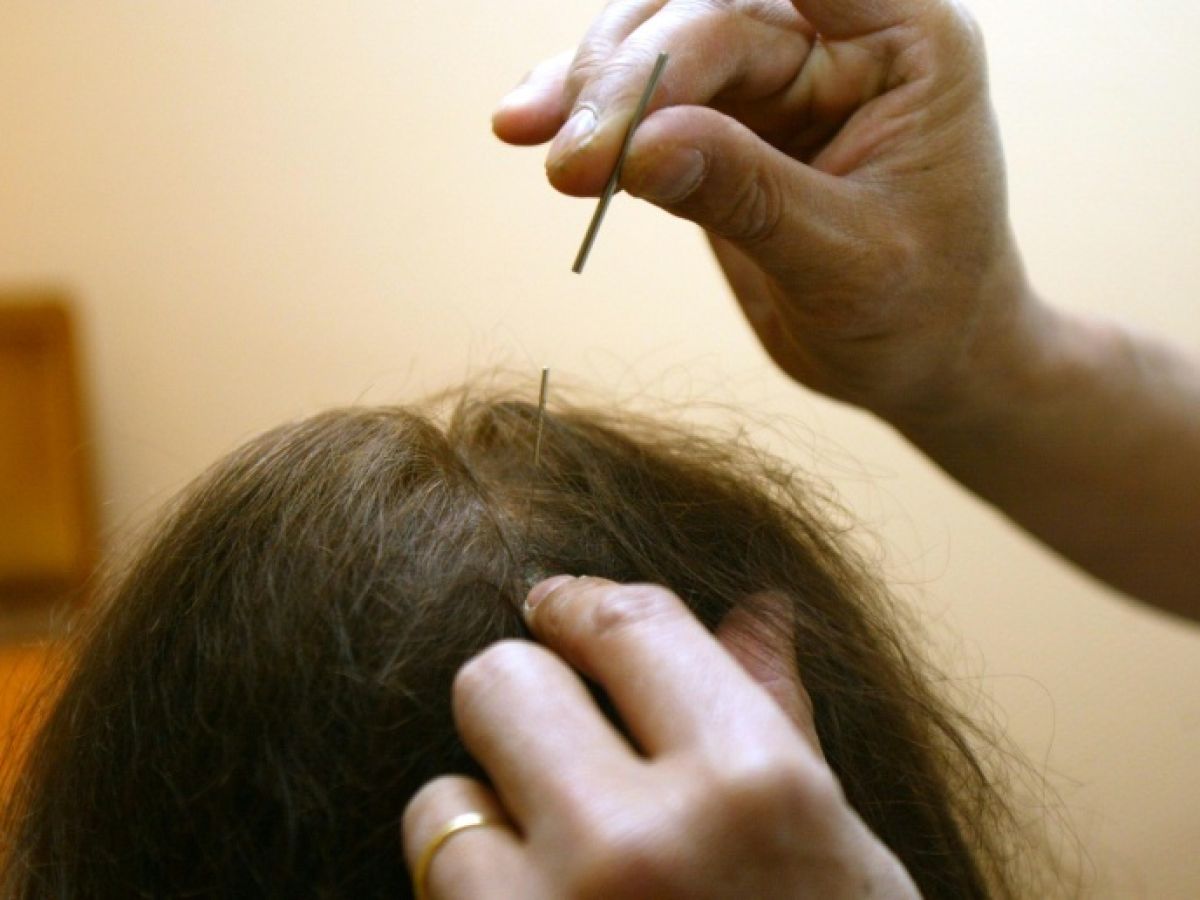
Sometimes called "gentle," "complementary," or "alternative" medicines, non-conventional healthcare practices (NCHPs) are not "neither recognized, scientifically, by conventional medicine, nor taught during the initial training of healthcare professionals," The Ministry of Health website details this. Of the more than 400 identified by the World Health Organization, some have made their way into French universities, medical or pharmacy schools.
"In recent years, we have seen an increase in the number of university degrees that pose a problem; we are facing a real case of infiltration." affirms Mathieu Molimard, president of the French Society of Pharmacology and Therapeutics.
From "Phytotherapy Aromatherapy", "Homeopathy", or even "Auriculotherapy"
From 101 in 2015, the number of "deviant" university diplomas (DU) or inter-university diplomas (DIU) jumped to 203 in 2025, according to Hugues Gascan, president of the Study Group on Sectarian Phenomena (GéPS). This biology researcher compiled a list, in each university, of the programs deemed problematic, primarily open to doctors or healthcare professionals—but not exclusively—and not recognized by the state.
Thus, one can find university diplomas in "Phytotherapy and Aromatherapy" in Besançon, Grenoble, or Montpellier. "Homeopathy" in Aix-Marseille or Poitiers, "Auriculotherapy" in Paris-Saclay or Strasbourg, "Music Therapy" in Nantes or Toulouse, or "Medical hypnosis" in Rennes or Saint-Etienne.
"This undermines the credibility and reliability of the higher education system."

The GéPS survey identified 57 techniques, with hypnosis, mindfulness meditation, aromatherapy, and acupuncture leading the way. Among universities, those offering the most are Montpellier, Strasbourg, Nancy, Nantes, and Grenoble.
"This undermines the credibility and reliability of the higher education system."Judge Gascan, also questioning "the financial aspects" potentially motivating underfunded universities to offer such degrees after courses costing between 1,500 and 5,000 euros.
According to Professor Molimard, it is necessary "Cleaning: either the practice is scientifically validated and it's medicine, or it isn't and we can do research on it but not teach it."Otherwise, there is a risk of " confusion " to the public, he points out.
A report submitted to the government in January, co-authored by this expert, recommended that "Ban the academic accreditation of unvalidated healthcare practices" and called for "Audit existing training programs." The Ministry of Health has not included this recommendation in its strategy to combat health misinformation.
"This is a public health issue."
Gold "This is a public health issue.", argues Dr. Hélène Harmand-Icher, president of the public health section of the Order of Physicians, warning of a "gradual infiltration" and referring to a process of inventory and sorting " in progress ".
However, his institution has a less strict approach than other actors: "Some of these training courses are reserved for doctors and are regulated by the Medical Council." like acupuncture "which gives rise to professional recognition" and can appear on doctors' nameplates and prescriptions.
"Others are open to non-medical professionals, which poses a real problem." because "The label 'faculty of medicine' confers upon them an unfounded medical legitimacy in the eyes of the public.", adds Dr. Harmand-Icher.
A "Evaluation work"
For his part, Professor Philippe Ruszniewski, honorary dean of the faculty of medicine at Paris Cité University, "sees no problem" to university diplomas in acupuncture, hypnosis or mindfulness meditation, "for uses validated in certain indications"But he "I don't see how we can authorize a university diploma in naturopathy, aromatherapy or homeopathy."
Marc Humbert, vice-president of the Conference of Deans of Medicine and dean of the Faculty of Medicine at Paris-Saclay University, also acknowledges "flaws", has "Identify and correct"He mentions a "Evaluation work" of certain courses offered in Saclay, notably the DIU in auriculotherapy, before decisions "In the coming weeks."
The Conference of Deans of Medicine will also dedicate its next session to non-clinical care practices: "We will request a review of training programs, as well as an audit and the withdrawal of training programs on unvalidated care practices," announced Mr. Humbert. For Professor Molimard, "it is time for institutions to take responsibility."
 English
  French