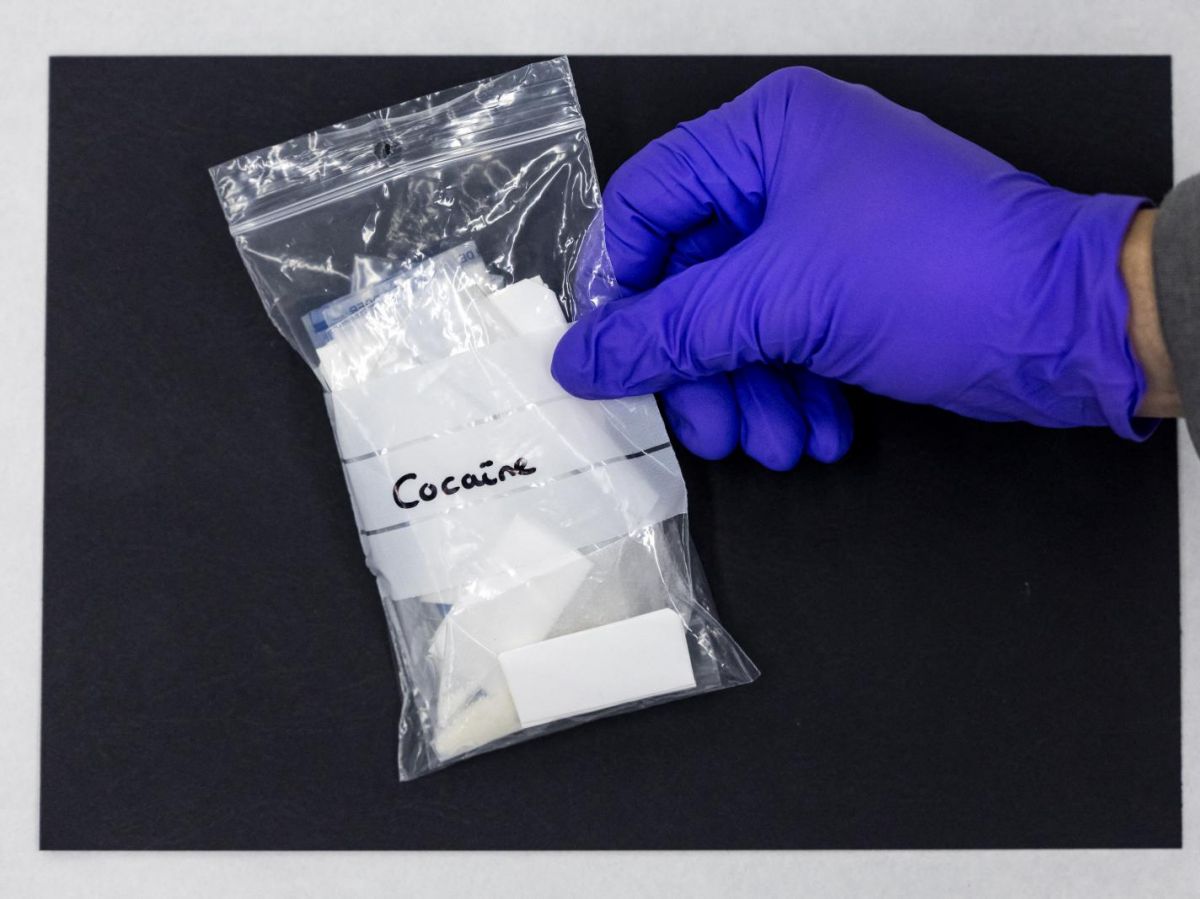
Cocaine trafficking in France has increased significantly in recent years, becoming the drug that generates the most money on the French market. Because of this increase, the number of emergency room visits due to cocaine tripled between 2012 and 2023, according to Public Health FranceUnfortunately, there is no pharmacological treatment for addiction to this psychotropic drug, largely because the mechanisms that cause it remain poorly understood. However, researchers at Michigan State University in the United States have just discovered part of the puzzle: a brain protein without which cocaine does not generate addiction. Their study, published on March 4, 2026, in the journal Science Advances, opens the way to a potential treatment for cocaine addiction.
A protein activated by cocaine
“ Addiction is an illness, as cancer, states Alfred Robinson, author of the study, in a press release. We therefore need to find treatments to help people with addiction in the same way we would for cancer. To search for this potential treatment, his team closely studied what happens in the brains of mice after they take cocaine. The researchers focused on the hippocampus, a structure at the base of the brain involved in emotional and spatial memory, and which appears to be necessary for relapse after a period of abstinence, at least in mice.

In previous studies, this same team had identified the DeltaFosB protein, which is expressed in hippocampal neurons when mice take cocaine. They confirmed this finding in their new research, also showing that this protein accumulates with drug use. DeltaFosB is therefore dependent on cocaine, but the effect of cocaine depends on DeltaFosB. Indeed, when this protein was present, the mice actively sought out the drug: in this experiment, the rodents were placed in a setup consisting of three rooms, one of which provided access to cocaine. Mice accustomed to the drug naturally spent more time in this room than in the others. But when this protein disappeared (through the targeted destruction of the mRNAs that code for DeltaFosB), the mice lost this interest and no longer showed a preference for the room associated with the drug.
DeltaFosB modifies the genetic activity of neurons
This protein is therefore essential in the process of cocaine addiction, but why? By studying neurons in the hippocampus, researchers observed that pyramidal neurons (so named because of their shape) were less active after cocaine use. This decrease in excitability only occurred if the DeltaFosB protein was expressed in these neurons. Without this drop in neuronal activity (due to the lack of this protein), the mice lost their interest in the cocaine chamber, which also happened if the researchers artificially stimulated these neurons.
DeltaFosB is therefore important for regulating the activity of pyramidal neurons in the hippocampus, and it does this by modifying the genetic activity of these neurons. Indeed, the presence of DeltaFosB following cocaine use led to a decrease in the expression of 108 genes and an increase in the expression of 45 other genes.
Potential avenues for a treatment for cocaine addiction
One gene in particular caught the researchers' attention: the one encoding calreticulin. This protein plays a role in the intracellular storage of calcium, which is necessary to regulate the excitability of these cells. Its expression tripled after cocaine use, but only in the presence of DeltaFosB. Upon closer examination, the researchers discovered that DeltaFosB interacts directly with the region where the calreticulin gene promoter is located; in other words, DeltaFosB directly stimulates calreticulin expression. As a result, calreticulin accumulates, increasing calcium storage, which is then less available to stimulate neurons, causing a decrease in their excitability.
But if the mouse is unable to express calreticulin (either because it no longer has DeltaFosB, or because it has been modified to lack the calreticulin gene), it is not attracted to the chamber with the cocaine. Encouraged by this discovery, Alfred Robinson and his team are now trying to design molecules that can directly target DeltaFosB, with the aim of blocking the addictive effect."This could be a treatment for cocaine addiction, but we're still a long way from that; it's a long-term goal."
 English
  French