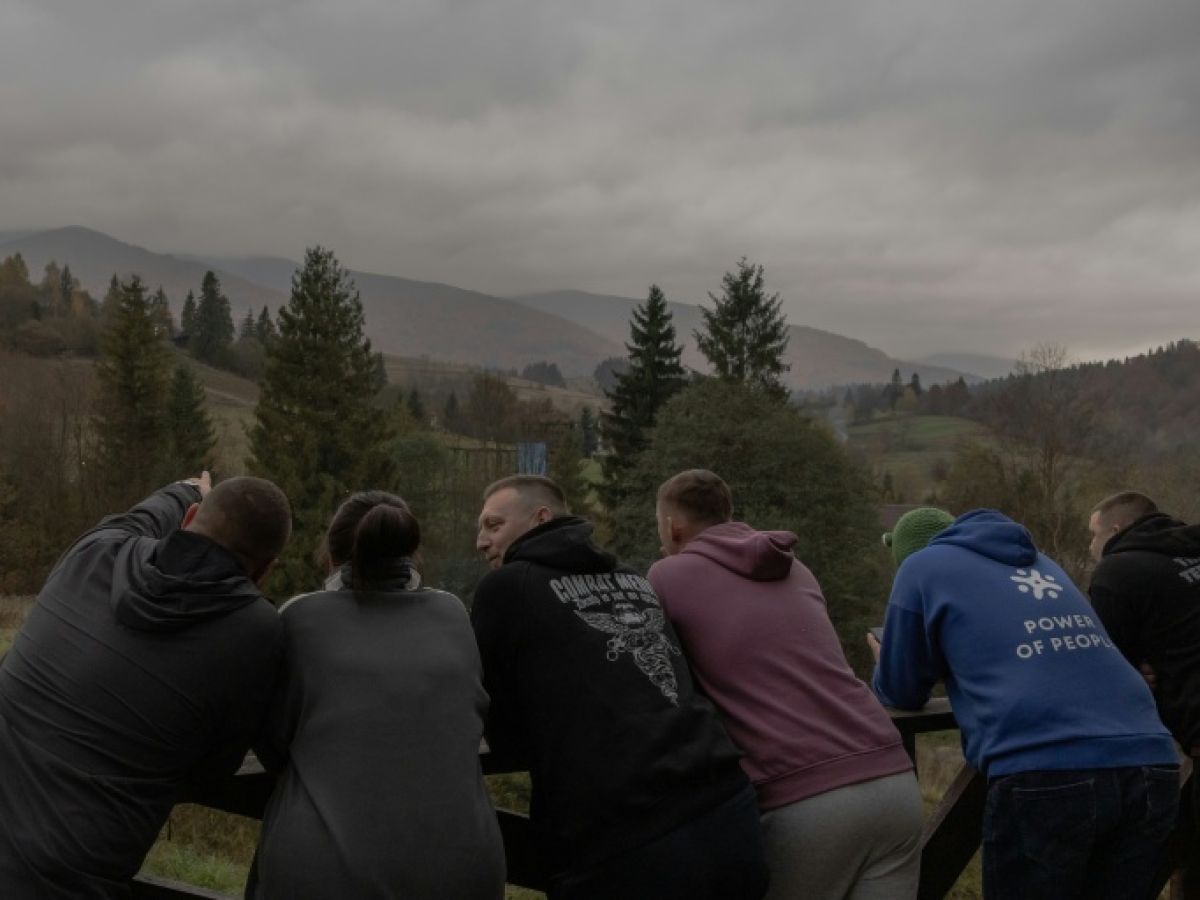
Roma Zukh, a military medic in the Ukrainian army, has learned a sad lesson after almost four years of Russian invasion: not to get too attached to his brothers in arms, because they can be killed at any moment.
This former truck driver with blue eyes and a red beard has lost too many friends to see his new acquaintances suffer the same fate.
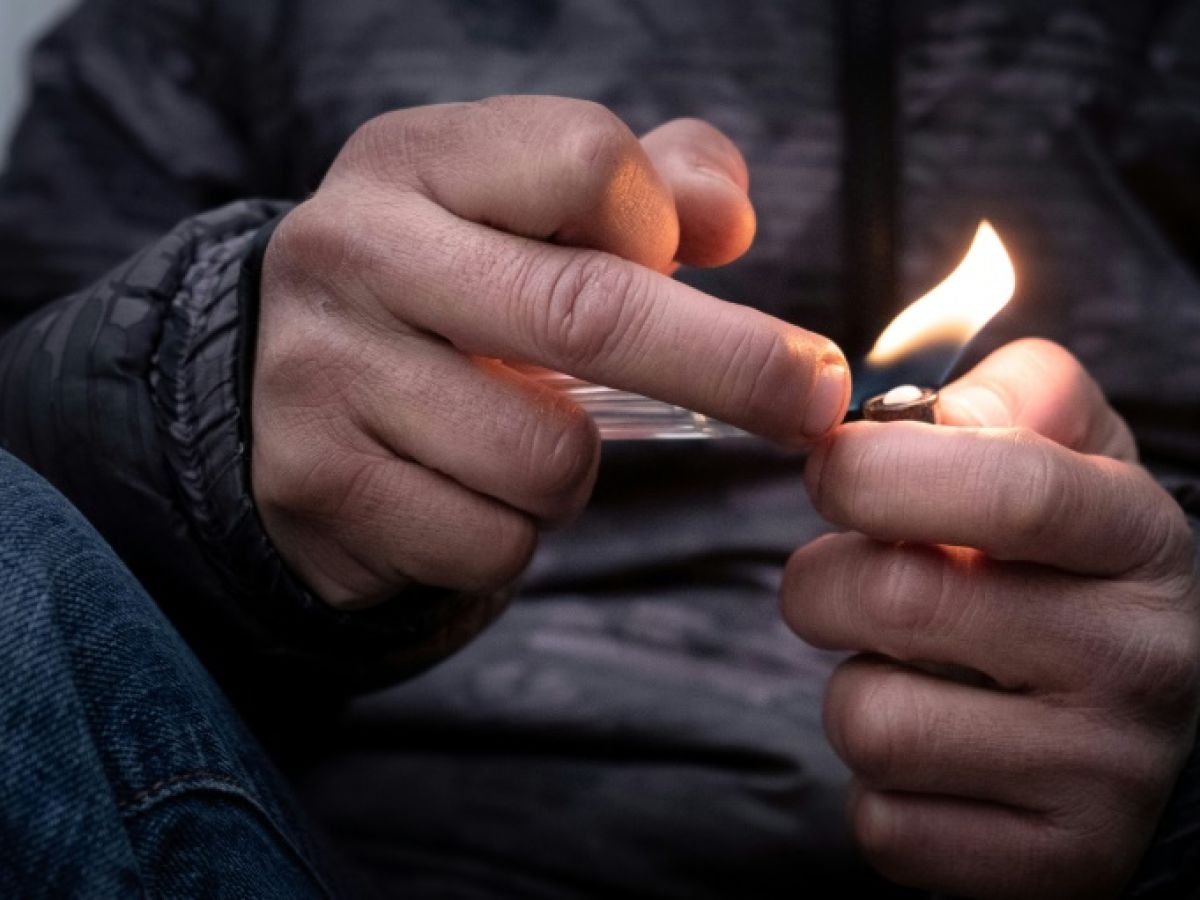
"We remember each and every one of them, (...) those with whom we were injured, those who enlisted at the same time (...) and those whom we will never forget," the 37-year-old man told AFP.

To avoid further trauma, Roma is now trying to keep his distance, having recently joined a new battalion. "I don't sit at the same table for lunch, for example," he says.

The heavy toll of the war is a harsh daily reality for the hundreds of Ukrainian caregivers, whose mental health is severely affected by the sights, sounds and smells of the front.
– Stay in the Carpathians –
More than 1,000 kilometers from the battlefield, during a 10-day retreat in the mountains to help him recover from what he had experienced, Roma saw his golden rule put to the test.
Organized in wooden chalets in the Carpathians of western Ukraine, the RePower program strongly resembles a children's summer camp, with pottery classes, hikes, and even sushi preparation.
For some, the relief was immediate.
When the car carrying Dmytro Kunytskiï began climbing the mountains, the 20-year-old was overwhelmed by a long-forgotten feeling.
"We opened the windows and the air filled with the scent of pine trees. We were simply very happy, like small children," he recalled to AFP.
However, completely leaving the front lines behind is not easy. Dmytro was often on the phone, delegating tasks to his team who remained there.
For the past two years, he has held a position that requires him to recover and examine the bodies of his comrades killed in combat.
"I have flashbacks. The smell of blood, (...) you have no chance to wash yourself immediately. And with every breath, you smell the blood," he says.

"But the deaths, the smells. That's nothing compared to the loss of so many friends," he adds, his eyes still ringed with red.
The psychologists working with the caregivers in the camp acknowledge that they are dealing with difficult cases. They will soon be returning to the front lines, which makes any in-depth therapy risky.
“We need time to stabilize people. It’s something new: working on trauma while the traumatic conditions are still present,” explains Dr. Andriy Anpleyev.
They must therefore resort to creative methods.
During a "sound healing" experiment, about a dozen military medics lay on yoga mats, relaxing to the sound of waves lapping on a beach and forests filled with chirping birds.
Suddenly, a growing snoring almost shattered the tranquility: Roma had fallen asleep. Lying under their blankets, the others suppressed a smile, trying to remain in the present moment.
– “Blood!”

After evening sessions with a psychologist, they dine in a local restaurant decorated with paintings of mountains and string lights.
War dominates even these moments of relaxation, such as during a game where you try to get your teammates to guess a certain word without being able to pronounce it.
"We don't have enough," one of the participants tries. "Blood!" his team immediately replies.
An attempt to mime the word "shorts" by cutting an imaginary pair of pants failed. "Tourniquets!" the team suggested, thinking of the devices that attach around limbs to stop severe bleeding.
In just a few days, the caregivers grew closer, creating a WhatsApp group to stay in touch once back on the front lines.
Roma also pledged to stay in touch, even though he couldn't shake his worry. "How can I not worry about them? Of course I worry, but they'll get through this. I hope so."
 English
  French