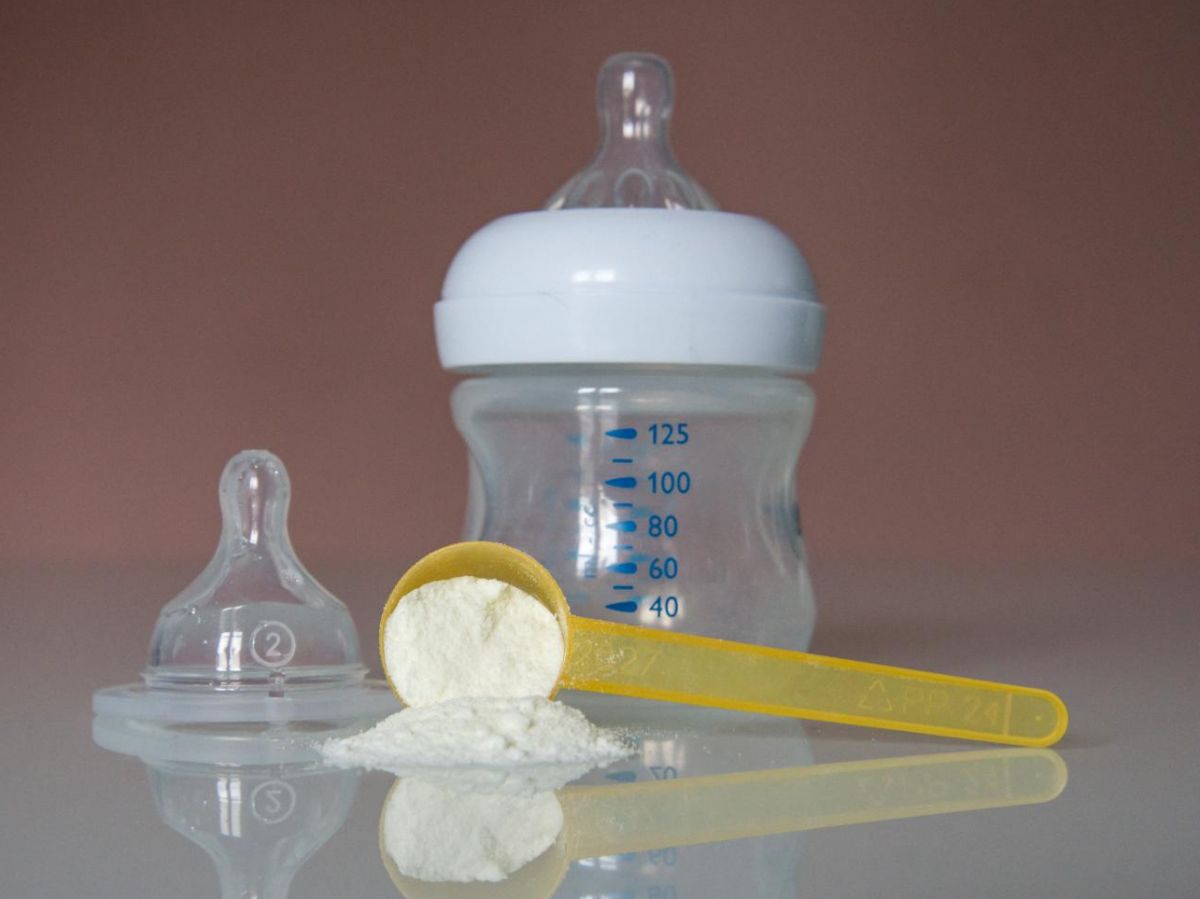
On January 5, 2026, Nestlé initiated a large-scale recall of powdered infant formula due to the potential presence of cereulide. Two weeks later, Lactalis and then Danone They are following suit by indicating on the government website "Consumer recall" batch numbers also suspected of containing this toxin.
Cereulide, which causes nausea and vomiting, can be dangerous or even fatal for vulnerable individuals, such as premature infants, newborns, or immunocompromised people.
Cereulide, a toxin secreted by Bacillus Cereus
Where does cereulide come from? It is a bacterial toxin, produced by certain strains of the family Bacillus cereusThese bacteria are naturally present in the soil in the form of spores, germinate in soil fauna, and then migrate to plants. The main route of transmission of this bacterium to humans is food. Indeed, due to its abundance in the soil and the resistance of its spores, B. cereus can contaminate virtually all raw materials, and particularly plants., recalls theAnses. Thus, they can be found in many foods (dried or dehydrated products, spices, aromatic herbs, certain vegetables, cereals, flours) or in products made from contaminated raw materials.
But all bacteria B. cereus are not harmful. Among the strains responsible for'food poisoning'We distinguish between those that trigger diarrheal disorders and those that secrete cereulide, which causes emetic symptoms (nausea, vomiting).


Bacillus cereus bacteria. Credits: CDC/Dr. William A. Clark Wikimedia Commons
In these bacteria, cereulide is released when they are heated to a temperature insufficient to kill them, then cooled. Once produced, the toxin is extremely resistant. Therefore, to prevent potential contamination, ANSES (the French Agency for Food, Environmental and Occupational Health & Safety) has determined that only heat treatment at 126°C for 90 minutes can eliminate it. In such cases, the dose of cereulide sufficient to cause emetic symptoms is estimated to be between 5 and 10 μg/kg (micrograms per kilogram) of body weight – which explains the vulnerability of infants. Symptoms have an incubation period of 30 minutes to 5 hours and last less than 24 hours.
The Ministry of Agriculture nevertheless points out that infections by Bacillus cereusare rare – about five cases per million inhabitants per year – and "very generally benign."
Is an oil rich in omega-6 the source of the contamination?
How do these bacteria B. cereus Have they ended up in foods as strictly controlled as infant formula? According to the Ministries of Agriculture and HealthThe ingredient suspected of being the source of the contamination is "An oil rich in arachidonic acid, beneficial for the proper development of babies, produced by a Chinese supplier."
Indeed, infant formulas are made from cow's milk – most of the time – in which the nutrient composition is modified to meet the infant's needs. Among the added lipids is arachidonic acid (ARA), which is naturally present in the breast milk and rich in omega-6. It is essential for the neurological development of the child and the functioning of the retina.
The production of arachidonic acid for milk supplementation is carried out by specialized industries, as it is highly regulated in Europe and relies on sophisticated biotechnological processes. The predominant method on the market involves microbial fermentation. The synthesized ARA is then incorporated into an oil, which is itself added to the milk. Consequently, the assumptions of contamination at B. cereus today they are focusing on the vegetable oil used by the supplier Cabio Biotech.
"To date, all infant formula manufacturers worldwide, having used arachidonic acid-rich oil from this supplier, must conduct a risk analysis to assess the safety of each batch," Nestlé assured.
Complex and poorly regulated health monitoring
Ultimately, health monitoring of this type of contamination relies on a shared responsibility between manufacturers, who must carry out routine sampling, and the authorities, who monitor compliance with standards. However, although a maximum bacterial threshold of 100,000 bacteria per gram of food is established, no value is defined for cereulide.
Furthermore, once contaminated food is consumed, it is much more difficult to detect the presence of cereulides. If it is not possible to directly detect cereulide toxin in biological samples (stool), the National Reference Centre for Anaerobic Bacteria and Botulism is able to identify the gene of the Bacillus cereus bacterium that produces the toxin., says the Ministry of Health.
So far, no analysis has revealed any causal link between the consumption of the infant formulas in question and the onset of symptoms in an infant.
 English
  French