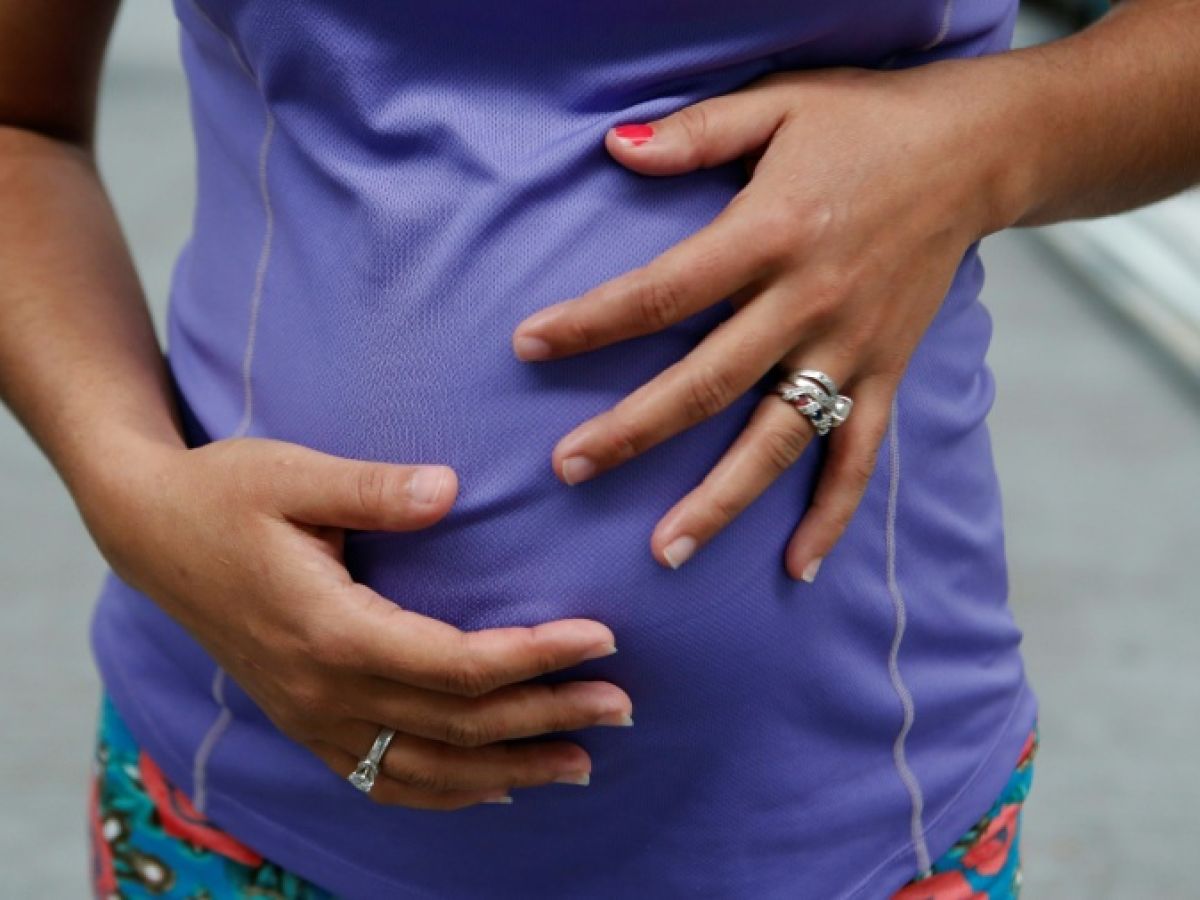
“The challenges of infertility have been analyzed in all their aspects” to allow for the “immediate launch of concrete and long-awaited measures,” declared Health Minister Stéphanie Rist on Thursday during the presentation of this plan. Indeed, President Emmanuel Macron promised such a plan two years ago, with its roots going back to 2022 when the government at the time commissioned a report on the subject.
Since then, virtually nothing had happened, even though infertility affects 3.3 million French people, according to this report. Only one aspect related to research had materialized with the launch of several programs, for example to improve the effectiveness of medically assisted reproduction (MAR), despite funding struggling to materialize.
A message sent to all 29-year-old French people
The very fate of the plan was in doubt. At the head of the Ministry of Health for most of 2024 and 2025, Catherine Vautrin had expressed her preference for a broader plan, focusing on the themes of aging and birth, raising fears among specialists of a blurring of lines.
The refocusing on infertility is now being handled by her successor, Ms. Rist. When French people want a child, "They don't spend their time looking at demographic graphs," pointed to his office during discussions with the press.

A key measure of the plan is that a message will be sent to all French citizens on their 29th birthday, starting at the end of the summer. But, Ms. Rist promises, there will be no pressure whatsoever. "The role of politicians is not to say whether or at what age to have children: what we must avoid is continuing to hear 'If I had known'."
A communication campaign on the challenges of reproduction is to be launched at the end of 2026.
This clarification comes in a context where Mr. Macron had been criticized by several feminist associations for linking infertility to a problem of "demographic rearmament", a warlike rhetoric deemed inappropriate. A communication campaign on the challenges of reproduction is to be launched at the end of 2026 and, very soon, an information website will be available on the subject.
The plan, whose total budget has not been specified, is not limited to communication. The ministry also wants to increase the possibilities for freezing one's eggs, a choice made possible by the bioethics law of 2021 but in practice, this is met with long waiting times.
By 2028, the ministry aims to authorize several dozen new institutions to perform this service. It clearly intends to open this area to private companies, while assuring that the procedure will remain free and exempt from any [fees/taxes/etc.]. "Market logic".
The plan also promises better support for polycystic ovarian syndrome PCOS, a disorder that affects many women and promotes infertility. This is also the case with endometriosis, but while the latter is already the subject of a government plan, PCOS has so far remained largely absent from public discourse.
"We have never been at this level of consideration for fertility and infertility issues."
Among patients, the announcement of this plan was welcomed by the BAMP collective, which brings together infertile people or those undergoing ART (Assisted Reproductive Technology). "We are entering a new era; we have never been at this level of consideration for fertility and infertility issues." its president, Virginie Rio, told AFP, while cautioning that this was just a starting point and that there remained "A lot of work."
The organization is campaigning, in particular, for the authorization in France of PGT-A, a diagnostic method that allows for the detection of abnormalities in embryos before implantation. The goal is to avoid many IVF procedures doomed to failure, but this technique is the subject of ethical debate regarding its potential for eugenic drift.
Alongside the plan to combat infertility, which will be led by the authors of the 2022 report – Professor Samir Hamamah and patient Salomé Berlioux – the ministry also announced it is working on health issues related to childbirth, as France presents significantly higher infant and maternal mortality rates to a number of European neighbors.
 English
  French