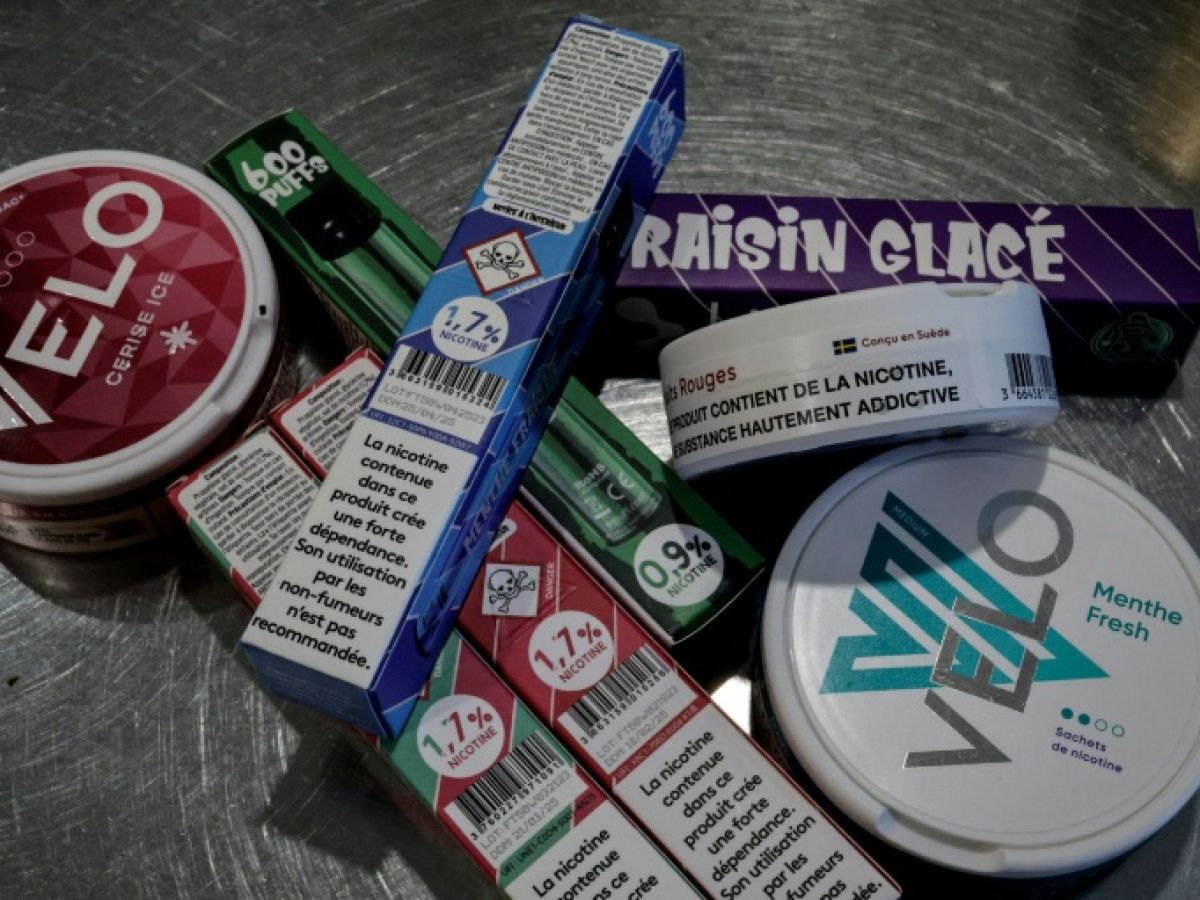
Disposable e-cigarettes, nicotine sachets with sweet flavors: these new products targeting young people pose a danger to the fight against tobacco and nicotine addiction, the WHO stressed on Monday, calling on all countries to legislate on these products.
"Schools are the new front in the war against tobacco and nicotine, where companies are actively recruiting a generation of drug addicts," stressed World Health Organization (WHO) Director-General Tedros Adhanom Ghebreyesus on Monday at the opening of the 11th conference of the WHO Framework Convention on Tobacco Control (FCTC).
For the past 20 years, tobacco use among young people "has declined by a third globally, prompting tobacco manufacturers to develop new products to attract new customers," Mr. Tedros explained.
According to the WHO, manufacturers present e-cigarettes as less harmful than traditional cigarettes, but in reality, they aggressively target young people and make them addicted. At least 15 million children between the ages of 13 and 15 worldwide now use them, the organization notes.
Mr. Tedros emphasized that "there is no evidence" of any benefit to public health from these products. On the contrary, according to him, "evidence of their harmfulness is mounting."
"In 63 countries for which data are available, the prevalence of vaping among adolescents is on average nine times higher than that observed among adults," Mr. Tedros further warned.
The WHO director recalled that the 180 States that have ratified the FCTC would examine by the end of the conference on Saturday "an agenda item relating to measures to prevent nicotine addiction and protection (...) against the harm reduction rhetoric promoted by the tobacco industry".
"Let's be clear: the companies that manufacture these products are not motivated by risk reduction or public health; they are motivated by only one thing: colossal profits for their shareholders," Mr. Tedros thundered.
The WHO recommends that all countries regulate nicotine pouches, electronic cigarettes, heated tobacco products and smokeless tobacco at least as strictly as conventional products.
"Several countries have banned these products. Those that have not should apply strict controls on flavorings, packaging, marketing and sales, protect against interference from industry and enforce age restrictions," urged the WHO director.
Twenty years after the entry into force of the FCTC – which had enabled comprehensive measures to combat smoking – the 11th conference (or COP 11) is to address issues related to the addiction of the youngest but also other themes such as cigarette butt pollution or the illegal trade in tobacco.
 English
  French