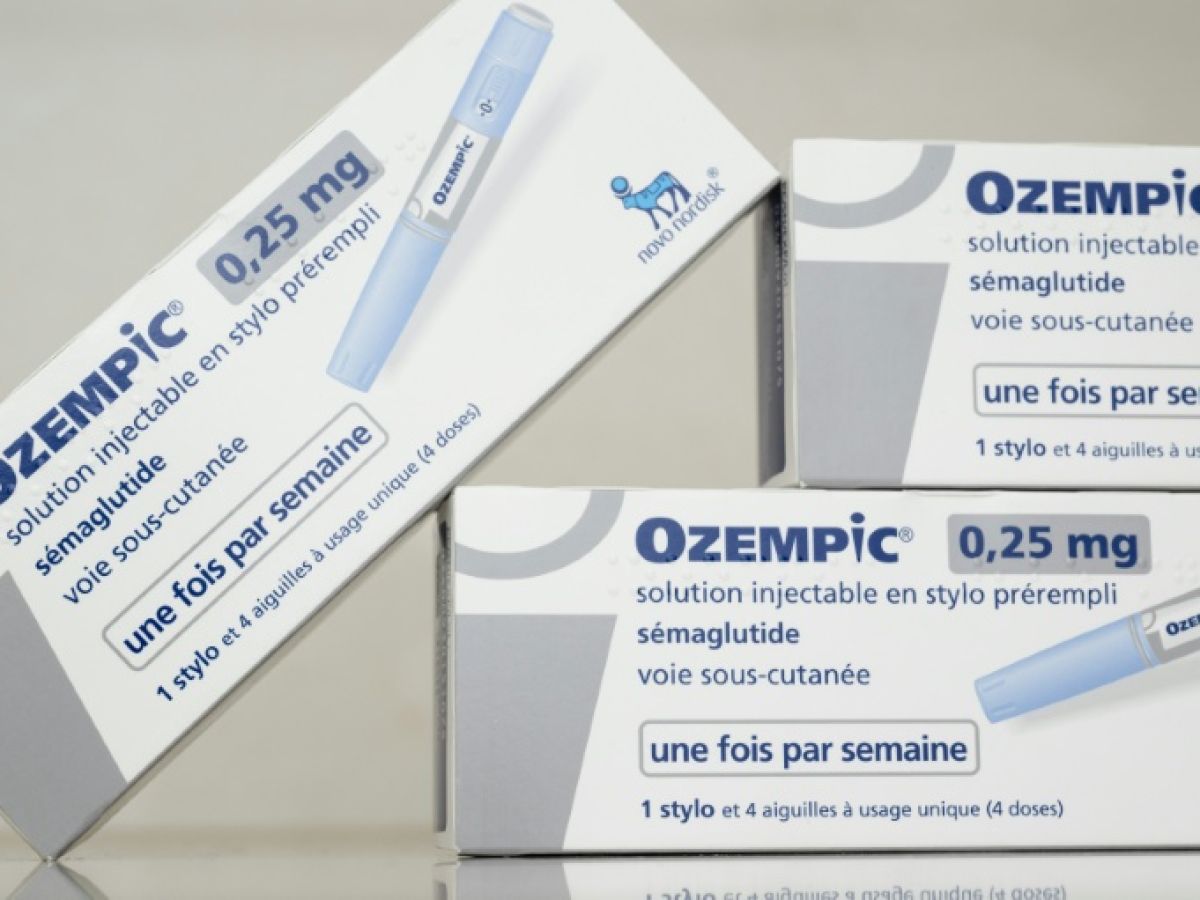
A range of drugs, called GLP-1, effective against overweight and diabetes, could help fight obesity, which affects more than a billion people worldwide, the World Health Organization (WHO) said on Monday.
They are known as Ozempic, Wegovy, Mounjaro… Appearing about ten years ago, these drugs first proved their worth in treating diabetes and, more recently, in promoting weight loss in obese people.

They are called GLP-1 because they mimic the action of this hormone, which is involved in both insulin secretion and the feeling of satiety, via brain mechanisms.
The WHO on Monday published guidelines for the first time on how these drugs can help obese people overcome this serious health problem.

According to figures from the organization, more than 3.7 million people died in 2022 from diseases related to overweight or obesity. This is more than the combined number of victims of the three leading infectious diseases that lead to death (malaria, tuberculosis, and AIDS).
Without strong action, the number of people suffering from obesity worldwide could double by 2030.
"Obesity is one of the most serious challenges of our time," said WHO Director-General Tedros Adhanom Ghebreyesus at a press conference at the agency's headquarters in Geneva.
"These new drugs are a powerful clinical tool that gives hope to millions of people," he stated.
– Not a “miracle solution” –
According to WHO guidelines, these GLP-1 drugs can be used in adults, except for pregnant women, "for the long-term treatment of obesity", which corresponds to a BMI of 30 or more.

The WHO stresses, however, that its recommendation is "conditional" (and not "strong"), because more data are needed, among other things, regarding the "effectiveness and safety" of treatments over the long term.
She also insists that these drugs alone cannot be a game-changer in the fight against obesity, a "complex chronic disease" that can notably "increase the risk of type 2 diabetes and heart disease" and increase "the risk of developing certain cancers."
The WHO calls for offering people taking these medications "intensive behavioral measures," based in particular on a healthy diet and physical activity. It also calls, more broadly, for the implementation of "robust policies" to promote health and prevent obesity, and for targeted screening of people at high risk.
"These drugs cannot be considered a miracle cure," Jeremy Farrar, WHO Assistant Director-General for Health Promotion, Prevention and Disease Control, told AFP.
"But they will clearly become a very important element of an integrated approach to obesity," he said, asserting that their impact on reducing the number of obese people, on diabetes, but also on cardiovascular diseases and others can be "major."
– “Equitable access” –
"There is a possibility that we can change this epidemiological trajectory of obesity," Francesca Celletti, WHO senior advisor on obesity, told AFP.

The "obesity epidemic" also has significant economic implications, according to the WHO, which estimates that if nothing is done, the global costs of overweight and obesity are expected to reach $3 trillion per year by 2030.
"If we do not somehow change the curve, the pressure on health systems will become unsustainable," warned Mr. Farrar.
The exorbitant prices of GLP-1 drugs have, however, raised concerns about their availability in the poorest countries. Diabetic patients, for whom the drugs were initially developed, have also experienced shortages.
“Our primary concern is equitable access,” said Tedros Adhanom Ghebreyesus. “Without concerted action, these medicines could contribute to widening the gap between rich and poor, between countries, and between people within the same country.”
 English
  French