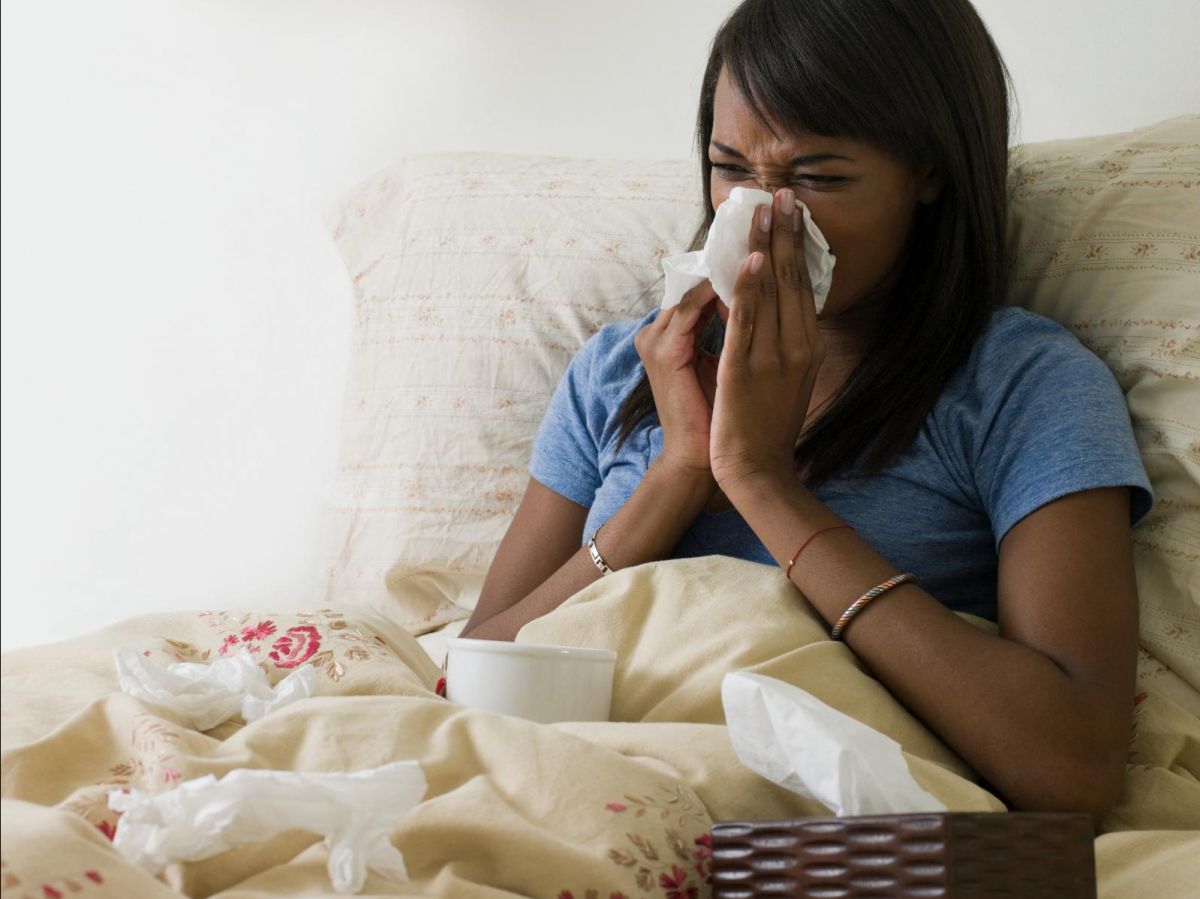
“ I'm going to have to cancel for tonight, I'm really sorry! “Humans, like many animals, tend to want to isolate themselves socially when they are sick. One might think that this is a reflex.” to be at peace or that this behavior stems from our character. But a study published in the journal Cell reveals that it is actually a biological process triggered by the immune system. The one that orders us to rest, alone on our sofa, is interleukin 1 beta.
Interleukins are small molecules produced by the immune system. They act as chemical messengers to send instructions, such as activating or calming the immune response, triggering inflammation, or repairing tissues. According to this new research, interleukin 1 beta is secreted as soon as we are sick. It is one of the first responders in the immune system during an infection. While it helps coordinate the body's defense against pathogens, our study showed that it also serves as a signal to the brain, informing it that the body is sick and triggering adaptive behavioral changes."s," explains Professor Gloria Choi, a neuroscientist at MIT (USA), who authored this work.
The molecule then travels to the brain, where it binds to receptors located on our neurons (IL-1R1). These receptors are located in an area called the dorsal raphe nucleus, a region of the brain involved in regulating mood and social motivation. When these neurons are activated, the animals withdraw from social interactions"And it's the same in humans," explains Professor Choi. Interleukin 1 beta appears to reprogram the brain's social motivational state, reducing the desire to interact socially while promoting rest and recovery.. »
Staying in bed: an evolutionary reflex?
We may have adopted this reflex in order to " preserve the species. » « From an evolutionary perspective, this behavior likely emerged because it offers a clear advantage: reducing the risk of transmitting pathogens to others. What we show is that it's not simply about "feeling sick or antisocial," but a deeply conserved biological program, hardwired into the brain's circuits." explains the researcher.
According to her, an infection is energetically demanding. By suppressing social activity, exploration, and eating, the body reallocates its energy towards immune defense and tissue repair. A kind of " compromise "put in place during our evolution. This theory, however, is not universally accepted. Not even within the team that published this work. Professor Huh, an immunology specialist at Harvard, does not subscribe to " This "energy reserve" hypothesis... We live in a world of over-nutrition. I find it hard to imagine that we would need to conserve energy to fight an infection more effectively. We already have an enormous amount of energy in our bodies. ! »
Read alsoColds, flu, gastroenteritis: does getting sick serve any purpose?
Whether it's a simple cold or a serious illness, the reflex is the same.
This reflex isn't only triggered by illnesses that are "mild" for most of us (like a cold, the flu, or gastroenteritis): it's actually triggered by all sorts of pathologies, even the most serious. Interleukin-1 beta is produced as soon as the immune system detects an infection or tissue damage; it can therefore appear in situations ranging from a simple cold to a more severe inflammatory condition."The authors continue. They hypothesize that the extent of its impact on behavior depends on the intensity and duration of immune activation." In our experiments, we modeled the acute phase of the disease, when interleukin-1 beta levels transiently increase and lead to behavioral withdrawal via defined neural circuits. »
Once the threat has passed, the immune system also has mechanisms capable of suppressing these responses. Another interleukin (IL-10), with anti-inflammatory properties, is then responsible for resetting these brain circuits. Having recovered, this "mini-hibernation" then comes to an end. Social activities resume… until the next symptoms appear.
 English
  French