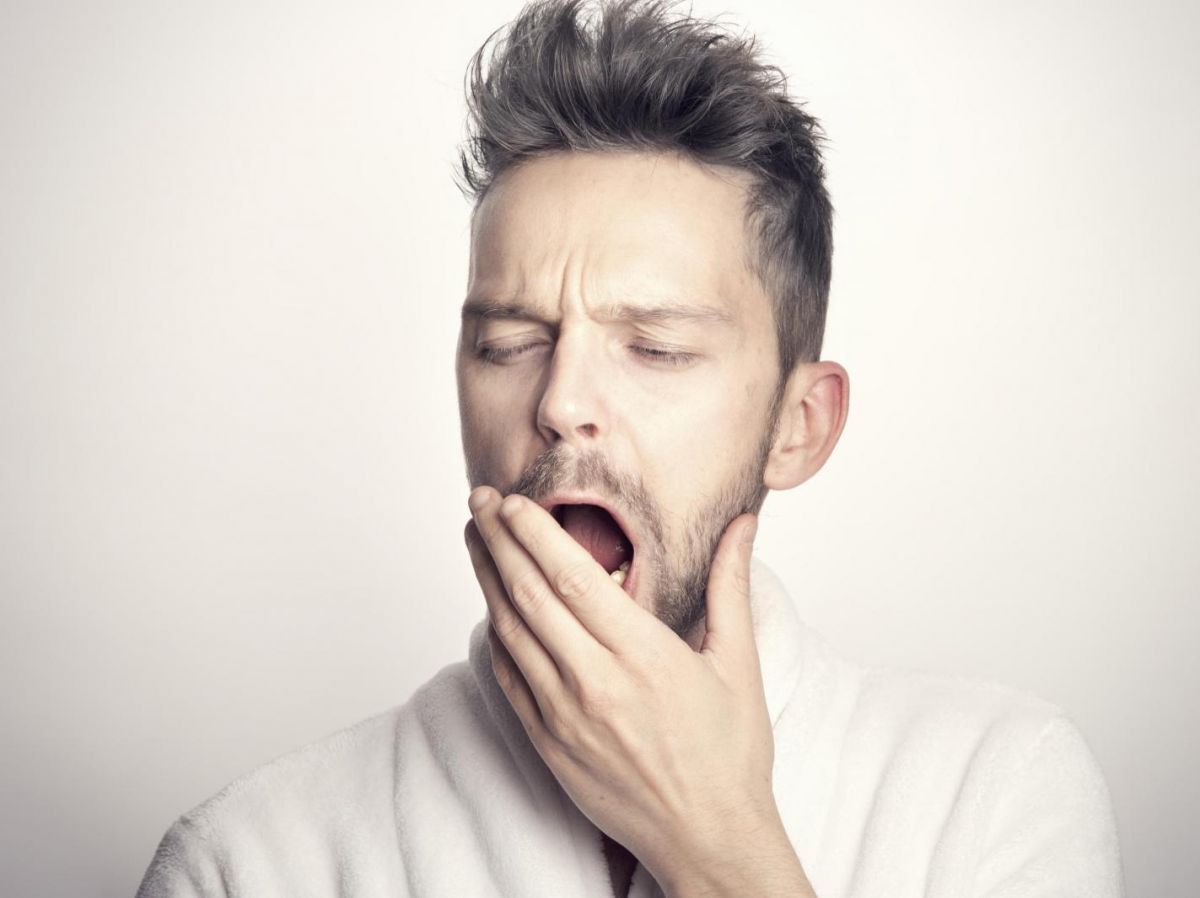
"Does yawning before bed serve the same function as yawning upon waking?""What's your question?" asks Marc Deforche on our Facebook page. This is our reader question of the week. Thank you all for your participation.
Why do we yawn? Universal, observable from fetal life and shared by almost all vertebrates (with the notable exception of the giraffe), yawning remains… a biological mystery! Its precise function still eludes researchers, as we wrote in a previous article. Science and Future.
Yawning, an ancient and deeply ingrained reflex

Yawning appears very early: as early as the 12th week of life in utero, according to Dutch work published in 1982. At this stage, it is even more frequent than in adults. This remarkably stereotyped behavior is characterized by a precise sequence: a slow inspiration, a brief pause, then a passive expiration accompanied by a generalized stretch mobilizing more than fifty muscles: from the face to the thorax, sometimes even to the arms during "pandiculation".
In other words, yawning is not just about opening your mouth: it is a true bodily choreography involving the respiratory, muscular and nervous systems.
A vigilance regulator?

For centuries, a simple idea prevailed: we yawn to better oxygenate our brains. As early as the 18th century, the physician Johannes de Gorter defended this hypothesis. But it was rigorously refuted in 1987 by the American neurobiologist Robert Provine: changing the amount of oxygen or carbon dioxide in the air does not increase the frequency of yawning. Therefore, the body does not yawn to compensate for a lack of oxygen.
Today, the most compelling hypothesis is that yawning plays a role in regulating wakefulness. Biologist Andrew Gallup suggests that yawning serves to stimulate alertness, particularly in animals living in groups. From this perspective, yawning would signal fatigue to other individuals, prompting them to be more vigilant in the face of danger. This mechanism would also explain the famous "contagion" of yawning, described as early as 1889 by neurologist Jean-Martin Charcot. More than just an individual reflex, yawning could therefore play a social role, almost like a collective alarm.
Read alsoWhy is yawning contagious?
A phenomenon that is still poorly localized in the brain
Other researchers, such as the French physician Olivier Walusinski, propose a complementary idea: yawning acts as a transition accelerator between different states of alertness. It occurs when our attention wanes (for example, when falling asleep, waking up, or after a meal) in order to "reconnect" us to our environment. This hypothesis is based on the presence, in cerebrospinal fluid, of molecules called hypnotics (which promote sleep). Yawning could temporarily decrease their local concentration, thus facilitating the maintenance of wakefulness. However, this mechanism remains to be demonstrated experimentally.
The paradox is striking: although yawning clearly involves the brain, no specific "yawning zone" has yet been identified. Several structures are involved (including the hypothalamus, the brainstem, and various neurotransmitters such as dopamine and oxytocin), but their exact coordination remains unclear. recent work on rats However, they revealed new connections between regions linked to emotions and stress, suggesting that yawning could also be influenced by our emotional state.
Read alsoDogs imitate a human yawn even if they don't know the person.
A useful gesture… and sometimes revealing
Yawning most often occurs in everyday situations: fatigue, boredom, the transition from wakefulness to sleep. But it can also be associated with certain medical conditions (stroke, migraine, epilepsy) or with taking medication, particularly some antidepressants. Paradoxically, it also has benefits: it promotes relaxation and concentration. Athletes and artists intentionally use it before a performance to release tension and improve their focus, even if it's not for the purpose of... "oxygenate the brain", as is still often believed.
 English
  French