In the living room of a complete stranger in Marseille, Yann Klimenko puts the finishing touches on his canvas before concluding his art therapy session. "It's more enjoyable than medication," says the forty-something with schizophrenia, who sees it as a welcome alternative to institutional care.
Around the table is also Sasha* (not her real name), 22, for whom participating in an artistic activity outside the walls of a medical institution "feels good." She has created more than twenty paintings in the past year, some of which decorate the homes of her loved ones.
For Yann, who has experienced long periods of internment, going out, creating and the support between people sharing his experience are all "steps forward in care".
"I am not in a hospital, in what I call the industrial psychiatric machine."

This therapeutic group takes the form of "a walk in Marseille", explains artist Arnaud Deschin de Beir, who founded the Aigle Abeilles association, dedicated to social integration through visual arts.

Twice a month, this Fine Arts graduate trained in art therapy offers exhibitions, architectural walks or the opportunity to be invited to private homes to paint.
On that day, Cyril Lahlou made his elegant apartment, complete with a lush garden, available. "I find this sharing interesting. It allows for a better understanding of mental illness, removing prejudices," explains the manager, who is keen to repeat the experience.
Painting, or any other artistic medium, is used "to help patients escape marginalization, to ground them in reality. The most important thing is not the result, but the entire process of getting there," explains the art therapist, who chose this discipline after being diagnosed with attention deficit hyperactivity disorder (ADHD) at age 50. The visual artist regrets having "wandered" for too long without knowing what he was suffering from.
Mental health was declared a "national priority" in 2025, breaking the silence surrounding the issue. The government has just decided to extend this designation to 2026, as stakeholders in the sector are now calling for concrete measures.

In its ability to bypass the limitations of verbal language, "art therapy is beneficial," notes Dr. Jean-Luc Martinez, child psychiatrist and coordinator of a hospitalization unit for young adults (18-25 years old) at the Trois Cyprès clinic on the outskirts of Marseille.
– “Not inevitable” –
In the city of Marseille, the need for psychiatry is "exploding but the resources are not keeping up", according to the Sud Santé union.
The crisis in public psychiatry, which affects the entire territory, is "particularly acute in the city's working-class neighborhoods, those very areas where social inequalities are most pronounced and where precariousness weighs heavily on the mental health of the inhabitants," the union explains.
The professionals interviewed note the decline of psychiatry with the closure of beds, longer waiting times for care, saturated or non-existent local facilities, exhausted staff and ultimately "users too often abandoned to their distress".
The city has experienced several violent incidents involving people suffering from untreated psychiatric disorders.
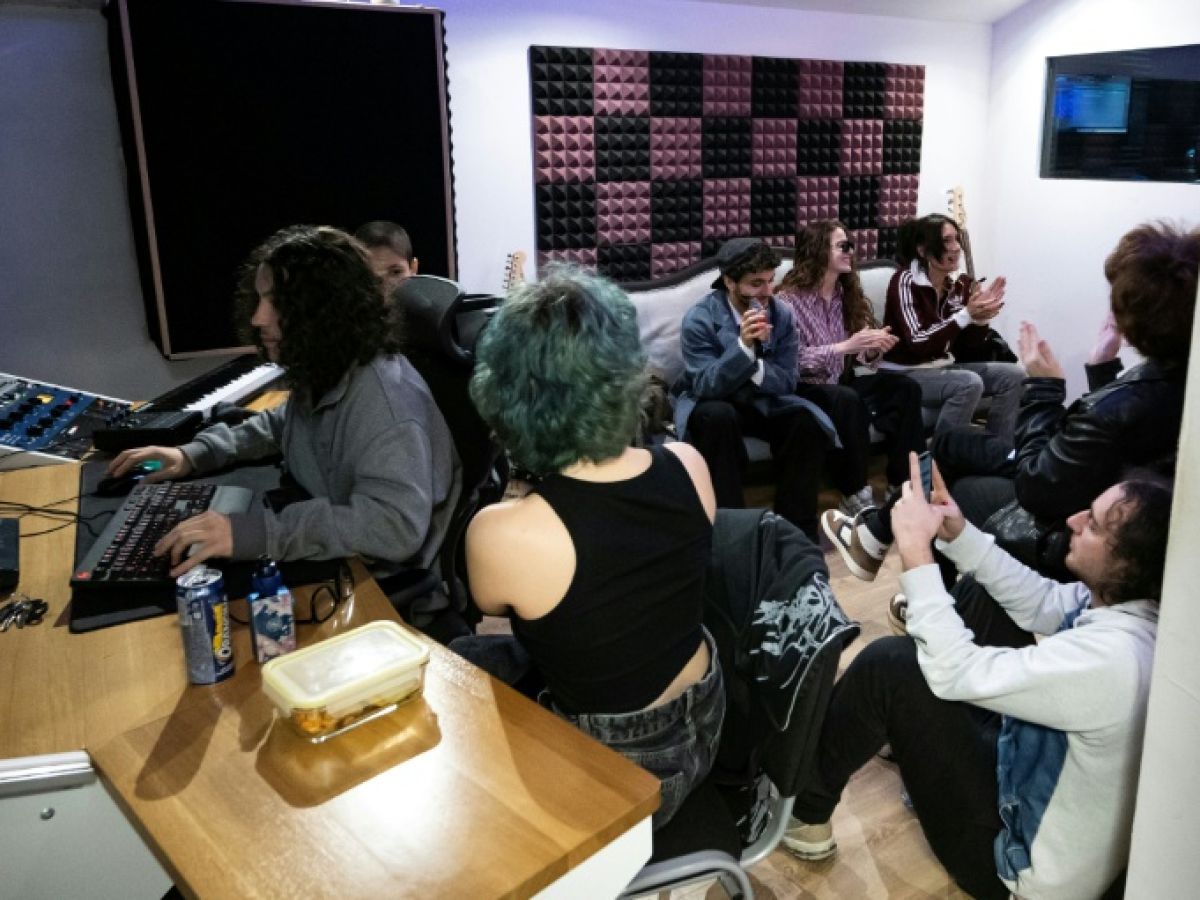
“Having mental health problems isn’t inevitable,” says Matthieu Saliceti, 25. In his music studio in Aubagne, the entrepreneur welcomes young adults once a week who are being treated at the Trois Cyprès clinic, where he himself stayed at 18. The program includes songwriting and recording.

Once settled in the booth, 22-year-old Zou expresses her "violence" and her "unease in society." "I feel free. It's easier to share a text than to talk to my psychiatrist," and "mental health isn't cured with medication alone," adds the student.
The institution advocates "an outward-looking psychiatry to help young people rediscover the taste of the world around them and regain confidence in themselves," explains Céline Giner, an educator who accompanies the group.
The other challenge is to prevent repeated hospitalizations.
 English
  French