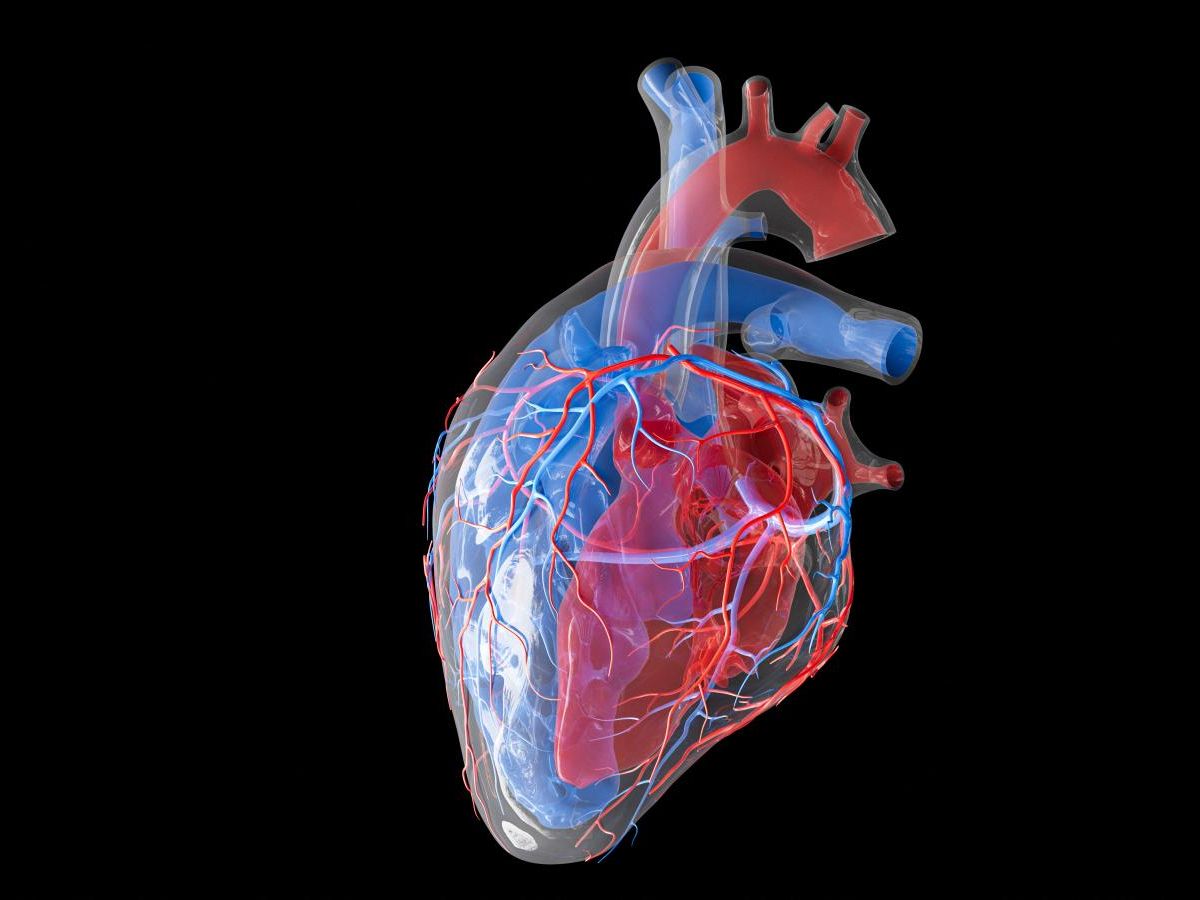
Heart cancer is an extremely rare disease. Affecting fewer than 2 people per 100,000 per year, these primary cardiac tumors represent a frequency of only 0.00171 to 0.0281 of all cancers. Unlike other organs where tumors most frequently develop, such as the lungs, breast, colon, or prostate, it is virtually impossible for tumor cells to multiply in the heart. For a long time, research assumed that the incessant movements of this organ hindered the development of cancers, without truly understanding why. For the first time, a study published in Science succeeded in finding the key mechanism that protects our heart.
“ If a tumor does indeed develop in the heart, then it is a metastasis originating from a cancer elsewhere in the body.“,” explains Professor Serena Zacchigna, a specialist in cardiovascular biology at the University of Trieste in Italy and author of this work. “To understand why no cancer manages to…” to be born In the heart, his team attempted an experimental study: comparing hearts subjected to normal mechanical load with hearts that underwent no movement. Using a mouse model, an injection of human cancer cells showed that in hearts without movement, tumor proliferation is significantly greater than in hearts that pump blood normally. Within 14 days, the cancer cells almost completely invade these hearts, compared to only 20% in normal hearts.
Nesprin-2, a key protein

It remained to be understood by what mechanism the tumor cells are stopped. At first glance, one might think that tumors simply cannot proliferate in the heart because of the constant physical movement that would "disrupt" them. But we have uncovered a much more complex biological process. It's not just about movement itself, but rather how cells perceive and respond to that movement.“At the heart of this biological reaction,” explains Professor Zacchigna, “is Nesprin-2, a protein found in muscles, normally responsible for maintaining the internal structure of cells and regulating their genetic activity. But in the heart, Nesprin-2 also acts as a mediator. When it senses the movement caused by the heartbeat, it triggers genetic modifications that prevent tumor cells from developing: all the genes associated with tumor proliferation are inhibited. And the opposite is also true in mice. When the action of Nesprin-2 is stopped, the tumors develop again.”
Read alsoHeart: Unknown valves in the lymphatic system
When heartbeats alter genetics

But why does Nesprin-2 act this way? Most likely because the heart is one of the most mechanically active organs in the body. Within the heart, cells are constantly exposed to significant, rhythmic forces. They therefore require a system capable of sensing and responding to these forces. As for the anti-tumor effect we observed, it is probably not a mechanism acquired over time to prevent cancer. Rather, it is likely a positive side effect related to managing mechanical stress at the cellular level.“
Read alsoThe shape of the heart may influence the risk of cardiovascular disease.
It's difficult to imagine how such a discovery could contribute to the fight against cancer. And yet, the team at the Cardiovascular Biology Laboratory in Trieste already has a few ideas. We are collaborating with engineers to develop medical devices capable of reproducing a mechanical stimulation similar to that of the heart. The idea would be to apply this to tumors, perhaps even skin tumors, in order to slow their growth.Meanwhile, the team is testing epigenetic drugs capable of reproducing the same effects as mechanical forces by remodeling cell chromatin—that is, the way DNA is organized and expressed in the cell nucleus. This research, however, remains at a very early experimental stage. In the meantime, the heart has just proven once again that it is definitely not an organ like any other.
 English
  French