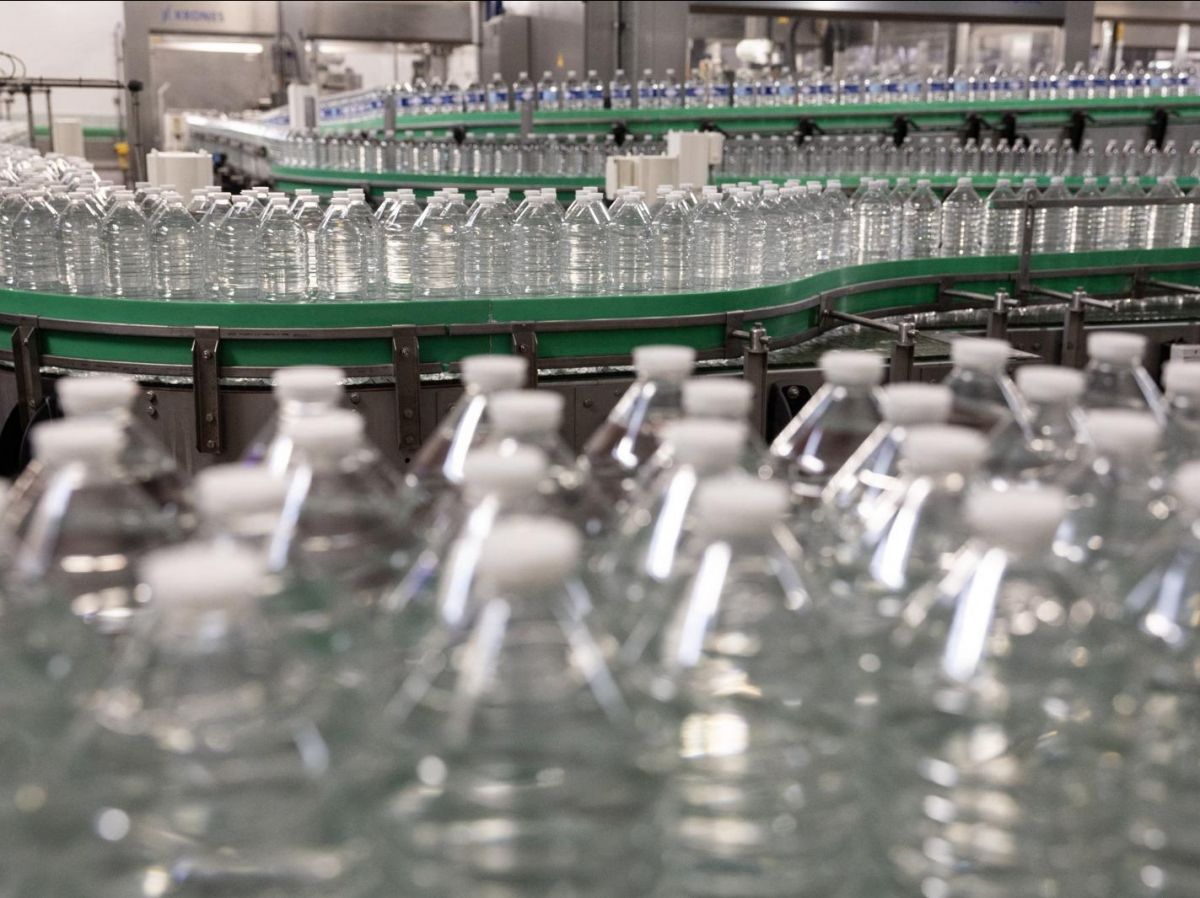
PFAS, the so-called "eternal" pollutants, were detected in three bottled water sources in the Loire and Ardèche regions, which were subsequently closed by their operators, the Auvergne-Rhône-Alpes prefecture indicated on April 24, 2026.
One of the largest bottlers in France
These are the Parot mineral water spring in Saint-Romain-le-Puy, in the Loire region, and two boreholes supplying water marketed under the name Perle, in Vals-les-Bains in the Ardèche region, a source close to the case told AFP, confirming a report by the radio station. This is Saint-EtienneAll these sources are operated by the company Sources Alma, one of the largest bottlers in France known for its brands Cristaline, Saint-Yorre or Vichy Célestins.

Read alsoBottled water: Brussels detects "serious shortcomings" in controls in France
Stop using sources
In total, 35 sources were monitored in 2025 in the region, according to a document from the regional prefecture summarizing its action in the fight against PFAS, of the chemical substances present in many products and virtually indestructible. “ At three sites located in the Ardèche and Loire regions, the detection of PFAS led government agencies to implement enhanced monitoring. Operators decided to cease using certain sources." , writes the prefecture.
A bottler already targeted by complaints
The Parot natural mineral water brand is no longer being sold."A company spokesperson told AFP, referring to the presence of nanotraces of PFAS without risk to human healthAccording to her, the quantities of PFAS detected are below the quality limit applicable to tap water (100 nanograms per liter) but higher than the limit set for natural mineral waters (30 nanograms per liter). Like Nestlé, Sources Alma is the subject of a judicial investigation opened in Paris in February 2025 concerning the treatment of its mineral waters, following two complaints from the Foodwatch association For " deception“.
Read alsoPFAS: Are “Eternal Pollutants” in Drinking Water Responsible for a Rise in Cancers?
PFAS pollution is decreasing in the Lyon chemical valley
Furthermore, the regional prefecture, which took up the PFAS issue in 2022 after a series ofjournalistic investigations, notes progress linked to standards imposed on the main emitters in the chemical valley south of Lyon, the industrialists Daikin and Arkema. In this area, discharges into surface waters are now on average two kg per month, compared to 300 kg in 2022, and emissions into the air have been reduced by 90% by Daikin and by a factor of 30 by Arkema, according to the prefecture.
 English
  French