In the dock of an unprecedented trial in Canada, testimonies follow one another and mental health issues systematically punctuate the stories of young people attacking the state for climate inaction.
“ It's a frightening world. I struggle to imagine what the future holds for us.«" , said Saj Starcevich, 20, in tears, during one of the hearings this week, who says she is no longer sure she wants to start a family after having dreamed of it as a child.
In this trial, which opened Monday in Vancouver (western US), these fifteen young people aged 17 to 25 are seeking to demonstrate that the state failed to protect them from the "« existential threat »" posed by climate change and expect the court to force it to strengthen its plan to reduce greenhouse gas emissions.
“ Depression, anxiety, and post-traumatic stress disorder have all been identified among adolescents. »"affected by the consequences of global warming," said Elizabeth Pinsky, a pediatrician and child psychiatrist in Boston, called to testify by the plaintiffs' lawyers.
Like Saj, "approximately 40% of young people in Canada are no longer certain they want children because of their concerns about climate change," the expert told the court.
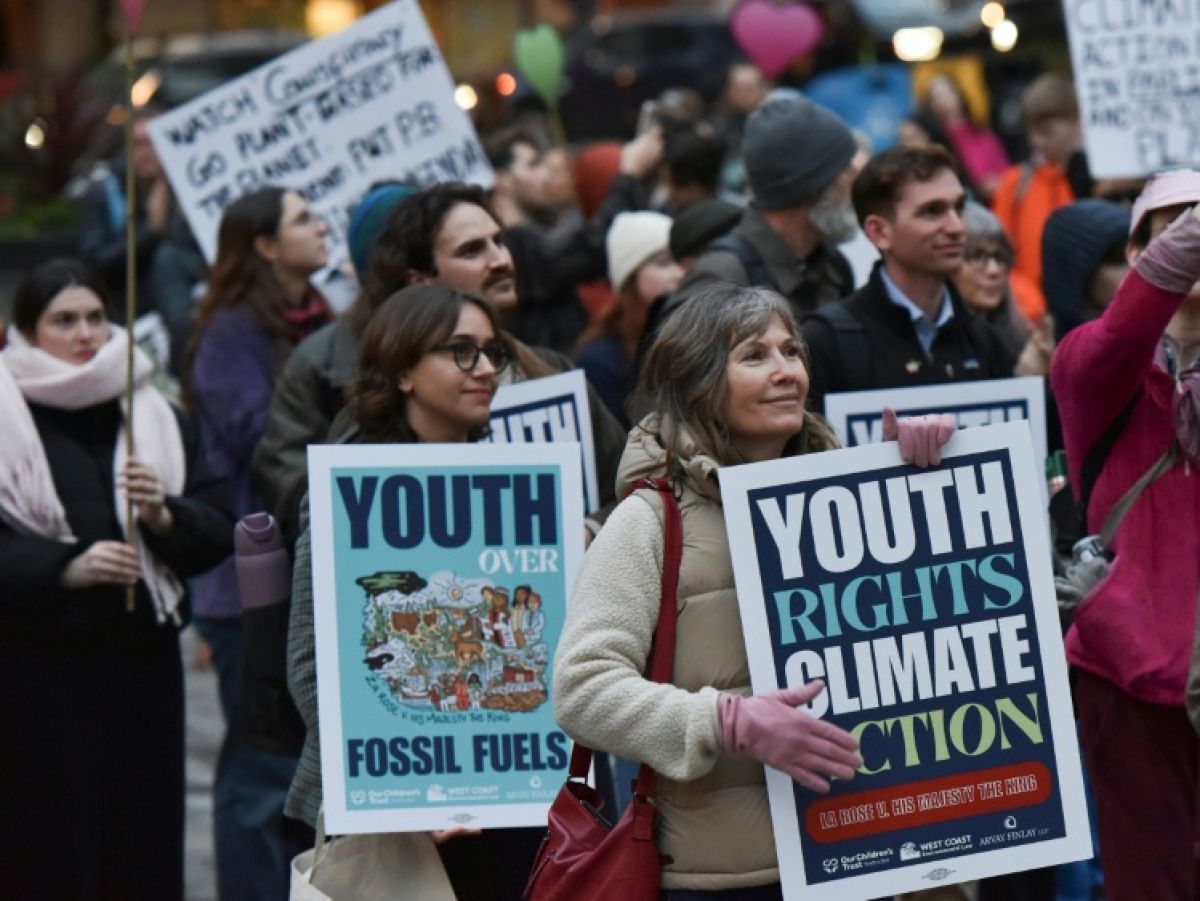
 Supporters of the first federal climate trial involving young people gathered in Vancouver, Canada, on October 26, 2026 (Credits: AFP – Don MacKinnon)
At the heart of these disturbances emerges the concept of "eco-anxiety," described as a "« category of psychological harm linked to anger and a feeling of betrayal »"in the face of violent climatic events and long-term changes caused by warming," explained Elizabeth Pinsky.
Climate change« had a profound impact on my mental health " And " I went through all the stages of this betrayal.«" explained another plaintiff, Albert Lalonde, disappointed by the reversals of Canadian Prime Minister Mark Carney on climate issues, particularly after the withdrawal of the carbon tax or the green light given to energy projects.
“ I simply no longer expect anything from governments.«" he assures.
These disorders, which sometimes extend "« over years »"According to Elizabeth Pinsky, these are also reinforced by the direct consequences of climate change on the lifestyle of these young Canadians, who are used to wide open spaces.
“ I love spending time outdoors and canoeing, an activity that brings me a deep sense of serenity. But I suffered from exhaustion due to the heat.«,” described Lauren Wright, 22, who grew up on a farm in the province of Saskatchewan (central).
A cycling enthusiast, Albert Lalonde said he cycles less in the summer due to respiratory problems linked to "« a very toxic air » during an episode of smoke from forest fires that reached Montreal.
Leandrea Reeves, another plaintiff, also linked her mental health to the smoke from the forest fires that affected her hometown of Whitehorse (north).« I feel quite disadvantaged in my life and in what I have the opportunity to experience.«" she described.
Read also«"Eco-anxiety is a strength rather than a weakness."»
«"Enjoying nature"»
 Supporters of the first federal climate trial involving young people gathered in Vancouver, Canada, on October 26, 2026 (Credits: AFP – Don MacKinnon)
“ Anything that prevents (…) young people, and certainly these complainants, from spending time outdoors and enjoying nature deprives them of what we know to be a benefit«" Elizabeth Pinsky stated in court.
In a 2022 report, the Canadian Ministry of Health acknowledged that climate change was affecting "« disproportionately affects the mental health of certain populations«", including young people.
As in Canada, hundreds of other cases have been brought before the courts in recent years elsewhere in the world to compel states to take action against climate change, with resounding successes such as in Germany, the Netherlands or South Korea.
Through its lawyer, Canada rejected at the start of the trial the imposition of any new "« obligation«", arguing that climate change was global and that Canada's action was limited.
 English
 French