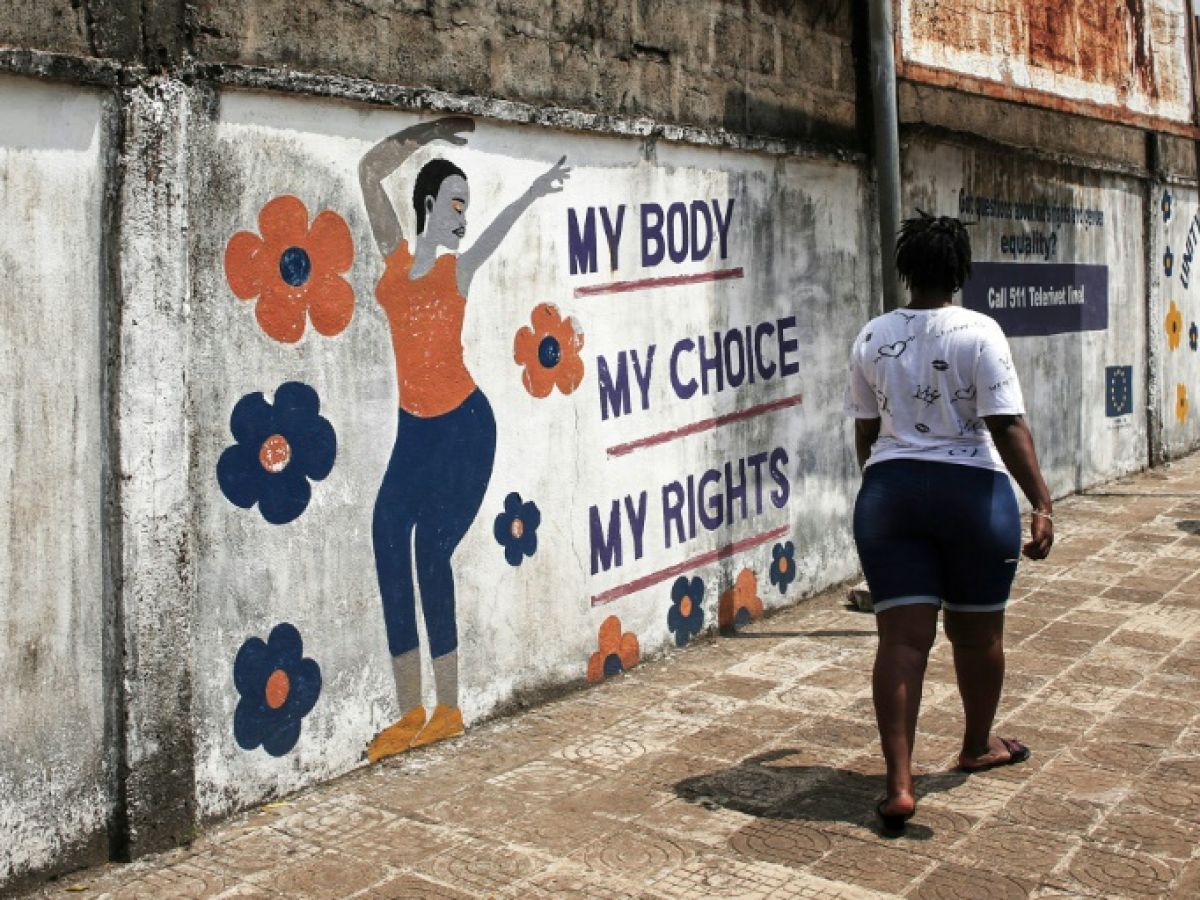
Lost and terrified, Mary had to resort to a healer in Sierra Leone to end her pregnancy when she was still a teenager, an ordeal that left her with recurring pain and trauma still experienced by many women in that country.
In a house overlooking a slum in the capital Freetown, Mary*, 28, wrings her hands as she recounts her ordeal to AFP.
“I was still young,” she says, explaining that she became pregnant at 15 during her very first sexual encounter, which was requested by her boyfriend. “I was afraid my mother would kick me out of our house…”
Fearing stigma for her pregnancy and unsure of where to turn, Mary contacted a traditional healer recommended by an acquaintance. The brutal procedure made her fear for her life.
"I suffered all night, then I had terrible cramps and a lot of bleeding for weeks."
Today, Mary still suffers from complications and very painful periods that last two weeks a month.
In Sierra Leone, many women wishing to terminate an unwanted pregnancy still have to resort to illegal practitioners or healers, who perform clandestine abortions.
– “Safe motherhood” –
However, in July 2022, President Julius Maada Bio gave his approval to the "safe motherhood" and reproductive health bill, which aimed to decriminalize abortion in this West African country where maternal mortality and early pregnancy rates are among the highest in the world.
The current law dates from 1861, a century before the country's independence. It prohibits abortion, except when the woman's life is in danger.
In 2024, this bill, supported by President Bio, was introduced in Parliament.
Last January, the head of state met with stakeholders and urged Parliament to accelerate the examination of the bill, calling for "the necessary profound transformations".
– religious reservations –
But since then, the president and Parliament have remained silent, and many advocates for abortion rights fear that the bill is subject to pressure from powerful religious groups in the country and strong cultural resistance.

The Interreligious Council of Sierra Leone, a civil society organization composed mainly of Christians and Muslims, strongly opposed it.
"The repeated mention in the bill of 'access to sexual and reproductive health' is synonymous with abortion," commented Archbishop Edward Tamba Charles of Freetown, head of the Council, to AFP.
"The bill goes against our religious, ethical and societal values and will endanger women and our society," he insisted.
Approximately 91,500 illegal abortions were recorded in Sierra Leone in 2021, according to a report by the African Population and Health Research Centre (APHRC) published in 2024.
– “A terrible experience” –
Bintu Kamara, 26, tells AFP about her ordeal in 2024, when she and her partner were not ready to welcome a child.
"I went to a pharmacy to buy mifepristone and misoprostol tablets" to end her pregnancy. The young woman administered the tablets to herself vaginally and orally.
"During the night, I felt excruciating pain in my stomach and I was losing blood; a few days later, the pregnancy was terminated and I then had to take treatment for an infection…," she testifies.
Studies conducted in 2025 by Afrobarometer reveal that 821% of Sierra Leoneans support access to contraception, but 871% reject the use of abortion in the event of an unwanted pregnancy.
Fatu Esther Jusu was only 15 years old when she ended her pregnancy by mixing traditional medicine herbs and roots with antibiotics recommended by friends, which caused bleeding and complications.
"I knew nothing about being pregnant, it was all a terrible experience," Fatu, a 22-year-old nurse, told AFP.
"I wouldn't wish the same thing on any young girl or woman," says Fatu, who does awareness work in communities, schools and colleges promoting abstinence and contraception.
– “Cassava stalks” –
Tamba Kongoneh, a gynecologist and obstetrician at the Sierra Leone Family Planning Association clinic in Freetown, told AFP that he has "performed numerous surgical operations on young girls and women following complications related to abortions."

"The healers insert cassava stems or other objects into their vaginas, which regularly leads to perforations of the uterine wall or intestines," laments Mr. Kongoneh, whose many patients thought they would not survive this ordeal.
"I treat their infections, I stop their bleeding and I do everything in my power to save them and preserve their dignity," the doctor says.
"The suffering I am witnessing," he said, "is avoidable, and no woman should have to risk her life making such a personal choice concerning her body."
* Name changed to preserve anonymity.
 English
  French