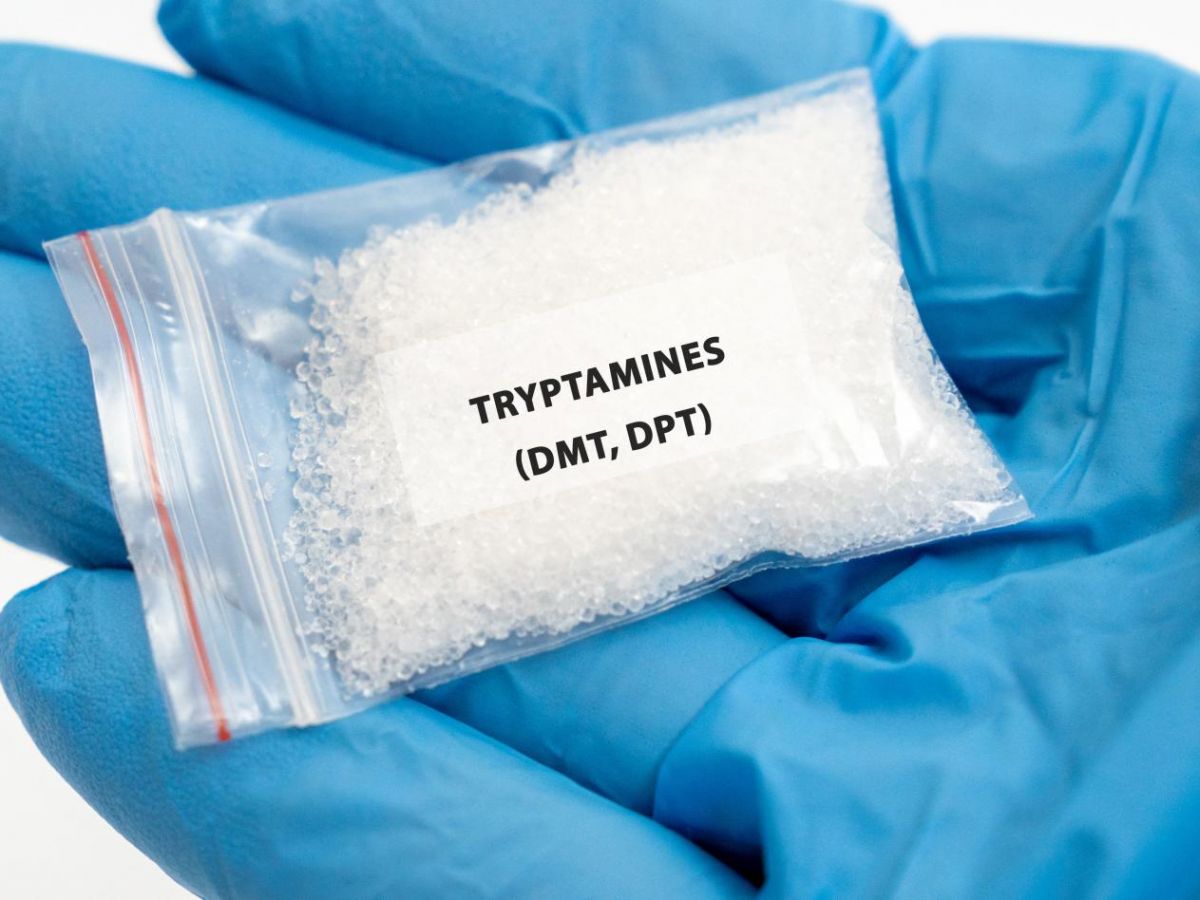
Faced with a rise in serious adverse effects linked to their consumption and potentially fatal risks, seven synthetic derivatives of a hallucinogenic substance, tryptamyne, will be banned in France from Wednesday, June 10, 2026, the drug agency announced.
Increase in cases of poisoning in 2025
From the beginning of 2020 to the end of 2024, a national addictovigilance survey reported " cases of serious poisoning, including one death that occurred after the consumption of several substances at the same time", the National Agency for the Safety of Medicines and Health Products (ANSM) stated in a press release. Of the 27 reports over four years related to synthetic tryptamines, 16 met a criterion of severity: 11 hospitalizations, four other medically serious situations, one life-threatening situation" she specifies. The year 2025 saw an increase in reports, numbering 13.
Prohibited from production, sale and use
To limit the risks, the agency decided to list seven synthetic derivatives of tryptamine (AMT, 4-AcO-DMT, 4-HO-MET, 4-HO-MiPT, 5-MeO-DMT, 5-MeO-MiPT, 5-MeO-DiPT) on the list of narcotics, so that their production, sale and use in France will be prohibited, from June 10.
Hallucinogenic effects
Tryptamines, hallucinogenic substances acting on the brain, exist naturally in certain plants (mimosa), fungi (psilocybe) and animals (toad). However, chemical processes make it possible to obtain synthetic tryptamines with enhanced hallucinogenic effects, and an increased risk of adverse effects. These versions are available in powder or liquid form, or are incorporated into foods such as chocolate or confectionery, explains the ANSM. These products are either swallowed, smoked, or taken nasally.she specifies on her site.

Read alsoDimethyltryptamine: a psychedelic component of ayahuasca known to be serotonergic
Neuropsychiatric disorders
These substances can cause serious problems: neurological (tremors, headaches, loss of consciousness that can lead to coma), psychiatric (hallucinations, delusions, anxiety, panic attacks, suicide attempts), cardiovascular (tachycardia, high blood pressure), digestive (vomiting, diarrhea), muscular, etc. In the event of poisoning possibly linked to a tryptamine derivative, professionals responding in an emergency situation (ambulance services, firefighters, paramedics) or in a specialized center are advised to contact the regional addiction monitoring center or a poison control center. For people who have consumed a tryptamine derivative and do not feel well, or for those around them, the ANSM advises calling 15 in case of life-threatening distress (loss of consciousness, panic attack, delusional or suicidal thoughts…).
The European Union Drugs Agency (EUDA) warns, in its annual report published Tuesday, on the risks associated with the " wide availability "of psychoactive substances" increasingly varied" . " Polyconsumption is also common "and increases the risks," EUDA also points out, calling for investment in prevention, treatment and social reintegration of users.
 English
  French