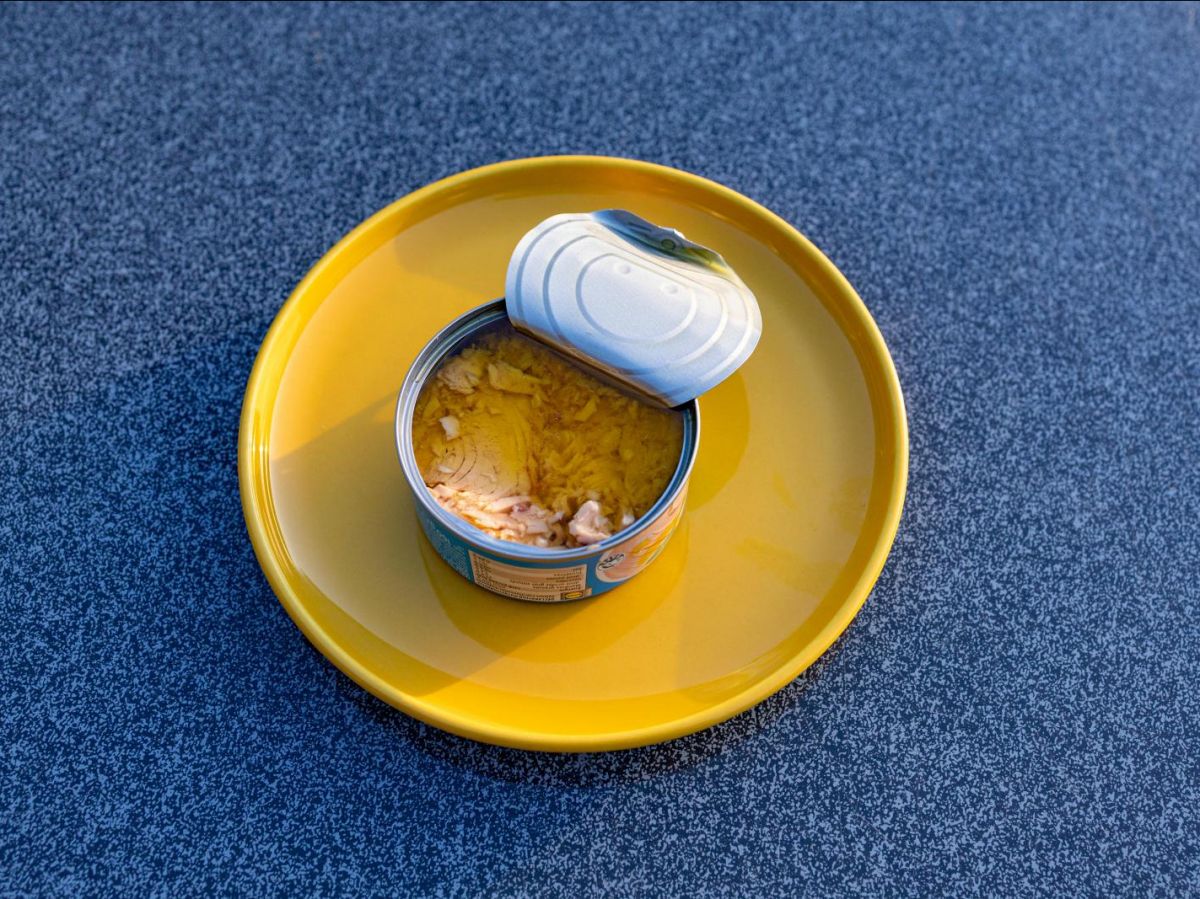
Remember, a year ago, panic over canned tuna. It was triggered in the fall of 2024 with the publication from a report from two non-governmental organizations (NGOs), Bloom and Foodwatch which demonstrated that in more than half of the boxes tested, sold in supermarkets, the mercury content exceeded the maximum limit set for other fish such as cod or anchovies, at 0.3 mg/kg.
"The panic among the general population does not appear to be justified."
This is a bombshell, since tuna is considered the favorite fish of the French, who consume on average 4.9 kilos per person per year, most of it canned. In the wake of this, the two NGOs immediately called for a ban on the marketing of tuna products exceeding 0.3 mg/kg of mercury and for this fish to be banned from nurseries, hospitals, maternity wards, retirement homes and school canteens, with some town halls immediately opting for this radical decision and removing tuna from menus.
“ While this report has drawn attention to a possible environmental risk, particularly for pregnant women and newborns, the panic among the general population does not appear justified., commented Professor Bruno Mégarbane, head of the intensive care unit at Lariboisière Hospital (Paris), in mid-November 2025 during its presentation on this topic at the last congress of the Society of Clinical Toxicology which was held in Bordeaux.
As a reminder, mercury is a metal that occurs naturally in trace amounts in the environment and whose neurotoxic effects have been known for a long time. Primarily released into the air by the Earth's crust, it then disperses into soils, water, and sediments, but can also originate from human activities, such as after thirty years of industrial pollution in the case of Minamata Bay (1957) or the consumption of contaminated grain in Iraq (1971).

In fact, natural mercury, highly volatile in its elemental form, has the particularity of transforming into methylmercury when it enters the aquatic environment. It is there that it concentrates, its concentration tending to increase up the food chain, each time an aquatic species eats a smaller one, according to the well-known principle of bioaccumulation. This fact has been known for a long time, as predatory fish such as tuna (but also swordfish and bigeye tuna) Thunnus obesus(One of the largest tuna species) are affected by mercury accumulation. Hence the recommendations that have existed for over 10 years to limit their consumption.
For its part, as early as 2012, the European Food Safety Authority (EFSA) conducted a study Estimates suggest that the human body can tolerate 1.3 micrograms of methylmercury per kilogram of body weight per week. This is known as the tolerable weekly intake, or TDI, the amount that can be consumed over a lifetime without risk of adverse health effects. For a person weighing 70 kg (a man or woman, neither pregnant nor breastfeeding), and according to the following calculation (1.3 µg/kg × 70 kg = 90 µg), this means they can safely absorb a maximum of 90 µg of methylmercury per week.
Regarding tuna contamination levels, the NGO report showed that the risk thresholds varied depending on the type of fish. While it is 0.3 mg/kg of methylmercury for the smallest fish, the threshold rises to 1 mg/kg for the largest (tuna, shark, swordfish, pike, marlin, sturgeon). “ According to the report, this difference in standards between fish was justified by commercial necessities, even though their toxicity is similar.”, notes Professor Megarbane.
Sales of canned tuna fell from 10 to 20% between November 2024 and February 2025
Indeed, when we delve into the NGOs' report, we are struck by the impressive number of stakeholders involved in establishing these contamination standards, all of which, the associations analyze, is done under the influence of intense lobbying by tuna fishing companies. So in the end, what can we conclude a year after this storm when we appreciate tuna but less so methylmercury?
Because, let's remember, tuna is also a healthy food, and its nutritional benefits (omega-3 fatty acids, protein, vitamins, etc.) should be taken into account. In short, canned tuna might be okay, but not too much. And therefore, a daily tuna sandwich or tuna salad several times a week at lunchtime is not a good idea.
Indeed, if we consider the high-risk contamination scenario (1 mg of methylmercury per kilogram of contaminated fish), the weekly limit of 90 micrograms of methylmercury is reached with just one 90-gram can. Hence the importance of following the recommendations of ANSES (French Agency for Food, Environmental and Occupational Health & Safety) regarding consumption. eat fish twice a week, combining an oily fish with a high content of omega-3 fatty acids (salmon, sardine, mackerel, herring) and another fish (pollock, hake, cod, sole…), without forgetting to vary the species and places of supply and to consume eel only on an exceptional basis.
For the group of pregnant women, breastfeeding women and children under three years old, always in accordance with the recommendations of ANSESIt is even advised to limit consumption and instead choose oily fish, data known before the publication of the report.
Finally, let's not forget that other population groups are also truly at risk,as pregnant women in French Guianadue to severe water contamination from mercury dumped by gold miners", the specialist points out. In any case, sales of canned tuna in France fell from 10 to 20% between November 2024 and February 2025, but already, in order to revive their sales, manufacturers have launched… tuna in bags!
 English
  French